
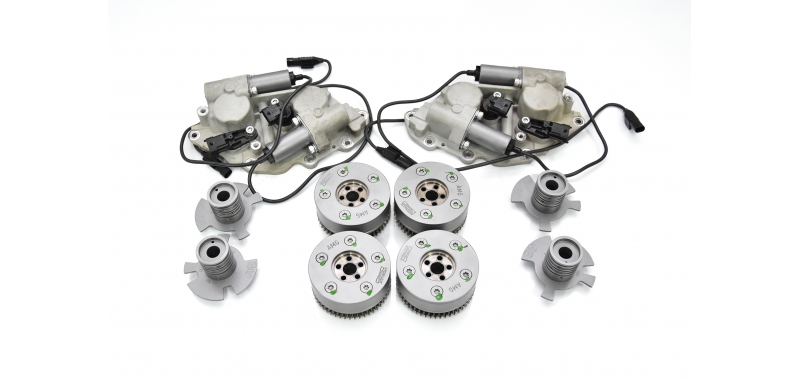
The Mercedes-AMG M156 6.2-liter V8, marketed in many models as the 6.3 AMG, is one of the most distinctive engines ever developed by AMG. This naturally aspirated V8 delivers excellent performance and an unmistakable exhaust note, but it is also known for several recurring mechanical issues.
One of those issues is wear inside the camshaft adjusters, commonly called cam phasers in the United States. The first symptom is usually a short metallic knock or rattle immediately after the engine starts. The noise often disappears within a few seconds and the engine then runs normally, but this does not mean the problem has gone away.
In this article, we explain:
- what fails inside the M156 camshaft adjusters,
- the most common symptoms of worn cam adjuster lock plates,
- how much new genuine Mercedes camshaft adjusters currently cost,
- why the sealing rings and aluminum VVT oil distribution housings must also be inspected,
- how the available camshaft adjuster rebuild kits differ,
- and how the MEHENKER repair plate kit addresses the original weak points.
Watch the Mercedes-AMG M156 and M159 camshaft adjuster rebuild
In our video, we disassemble an original Mercedes-AMG M156 camshaft adjuster and show the worn locking mechanism, damaged internal components and the parts included in the MEHENKER rebuild kit.
We also explain where the characteristic startup rattle comes from, how the locking-pin pocket wears and which sealing components should be inspected during the repair.
The most common symptom is a metallic knocking or rattling noise that lasts for a few seconds after startup. The noise may disappear completely when oil pressure builds, but this does not mean the camshaft adjuster is operating correctly.
What are the symptoms of worn M156 camshaft adjusters?
The most common symptom is a metallic knocking or rattling noise that lasts for a few seconds after startup. In the United States, owners and repair shops usually describe this as M156 cam adjuster rattle, cold-start rattle or startup rattle.
The noise is usually most noticeable after the vehicle has been parked for several hours. Once oil pressure builds, the camshaft adjuster begins to operate hydraulically, the noise fades and the engine may appear to run normally.
After the initial rattle, the vehicle may:
- idle smoothly,
- produce full power,
- show no noticeable symptoms while driving,
- and have no check engine light.
Mercedes-Benz has also described rattling from one or more camshaft adjusters after an extended vehicle standstill in technical service information for the M156 and M159 engines.
The fact that the noise disappears after a few seconds does not mean the adjuster is operating correctly. During startup, the internal locking pin is not being held securely in the worn lock plate, allowing the rotor inside the cam phaser to move before stable oil pressure is available.
Camshaft correlation codes and extended cranking
When the wear becomes more severe, especially in the exhaust camshaft adjusters, the engine may develop crankshaft-to-camshaft correlation faults.
The codes most commonly associated with this condition include:
- P0017 – crankshaft position / exhaust camshaft position correlation, Bank 1,
- P0019 – crankshaft position / exhaust camshaft position correlation, Bank 2.
The exact wording may vary depending on the scan tool and engine control module software.
The engine may also require extended cranking. If the camshaft adjuster is not locked in the correct base position, the ECU may need more time to establish the relationship between the crankshaft and camshaft position signals.
Once the engine starts and oil pressure reaches the cam phasers, the vehicle may again run normally. However, the mechanical wear inside the adjuster is still present.
P0017 or P0019 alone does not prove that the camshaft adjuster lock plates are worn. A complete diagnosis should also include verification of mechanical timing, timing chain condition, sensor signals and actual camshaft position values.
Can you drive with worn M156 cam adjusters?
In the early stage, a worn locking-pin pocket does not usually cause immediate engine failure. The vehicle may continue to drive normally, with a brief startup rattle as the only obvious symptom.
However, the problem should not be ignored.
Every time the engine starts, the locking pin strikes the damaged edge of the lock plate. This gradually increases the clearance and continues to damage the internal components.
Over time, this may lead to:
- severe wear of the locking-pin bore or pocket,
- damage to the rear lock plate,
- broken spring seats, washers or other internal parts,
- metal fragments entering the timing area or oil pan,
- camshaft timing correlation faults,
- progressively longer cranking time,
- and inaccurate variable camshaft timing control.
At first, the condition may not create an immediate safety risk. As the wear increases, however, the possibility of broken internal parts and loss of correct camshaft control also increases.
For this reason, it is better to repair the adjusters before the cold-start rattle becomes very loud or permanent camshaft timing faults appear.
What actually fails inside an M156 camshaft adjuster?
Each M156 camshaft adjuster contains a mechanical locking system that holds the cam phaser in a defined base position before the engine starts and before sufficient oil pressure is available.
After the engine is shut down, the locking pin should engage a machined pocket in the rear lock plate. During the next startup, the adjuster should remain locked until oil pressure builds.
The problem is that the locking-pin pocket gradually wears. Its original shape is damaged and the locking pin can no longer hold the rotor securely.
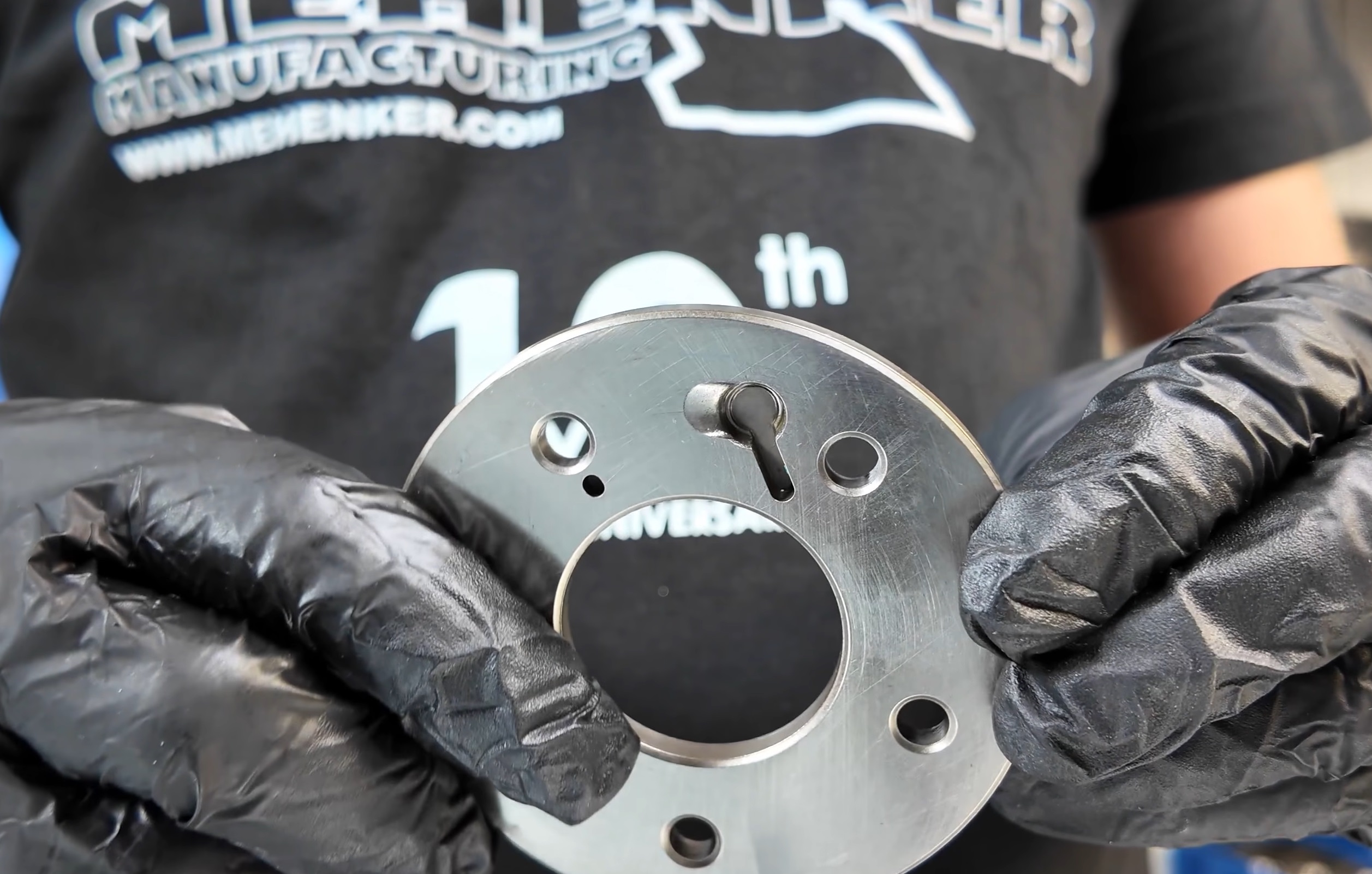
Clearance develops inside the camshaft adjuster. During startup, the internal rotor moves and strikes the housing, producing the characteristic rattle for several seconds.
Replacing only the spring or simply reassembling the original adjuster does not correct the root cause. If the lock-pin pocket is worn, the lock plate must be replaced or properly repaired with a stronger wear surface.
How much do new M156 camshaft adjusters cost in the United States?
The factory repair method is to replace the complete camshaft adjusters. The M156 engine uses two intake adjusters and two exhaust adjusters.
Current genuine Mercedes online pricing in the United States is approximately:
| Part | OEM part number | Approx. online price each | Quantity per engine |
|---|---|---|---|
| Intake camshaft adjuster | A1560503647 | about $547 (approx. $760 MSRP) | 2 |
| Exhaust camshaft adjuster | A1560503747 | about $688 (approx. $955 MSRP) | 2 |
At these current online prices, a complete set of four genuine Mercedes camshaft adjusters costs approximately:
- $1,094 for two intake adjusters,
- $1,375 for two exhaust adjusters,
- or approximately $2,470 for all four adjusters.
Using listed MSRP values, the same set can exceed $3,400 before adding bolts, seals, gaskets, fluids and labor for removal and camshaft timing setup.
Prices are approximate and may change. Always confirm the current part number and vehicle compatibility using the VIN before ordering.
Missing spring seats and washers
When an M156 camshaft adjuster is disassembled, the lock plate is not always the only damaged component. Small plastic spring seats or washers may also be worn, broken or completely missing.
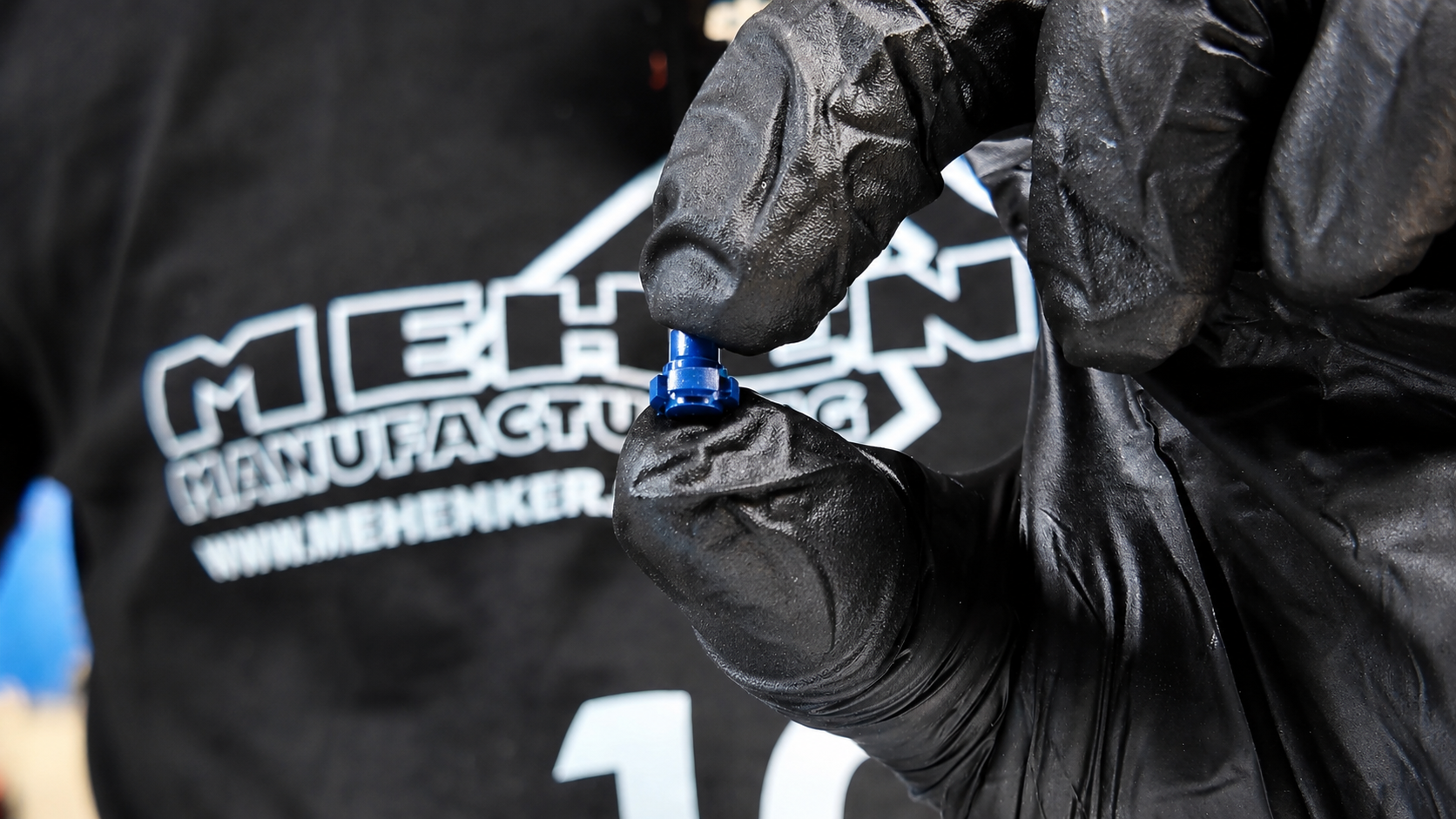
Although these parts are small, they support and guide the locking-pin spring and are important for correct operation of the locking mechanism.
Mercedes-Benz does not sell these spring seats separately. Under the factory parts program, the complete camshaft adjuster must normally be replaced even if the main housing and hydraulic components are still serviceable.
The MEHENKER rebuild kit includes new spring seats made from a durable engineering polymer.
Steel sealing rings on OEM part A1560520450
Another area that must be inspected is the set of steel sealing rings installed on the central camshaft pilot bushing or reluctor hub. Depending on the U.S. parts catalog, OEM part A1560520450 may be described as a camshaft pilot bushing, reluctor wheel or reluctor hub.
OEM part number:
A1560520450
Each hub uses three steel sealing rings. These rings separate the oil passages that control the camshaft adjuster.
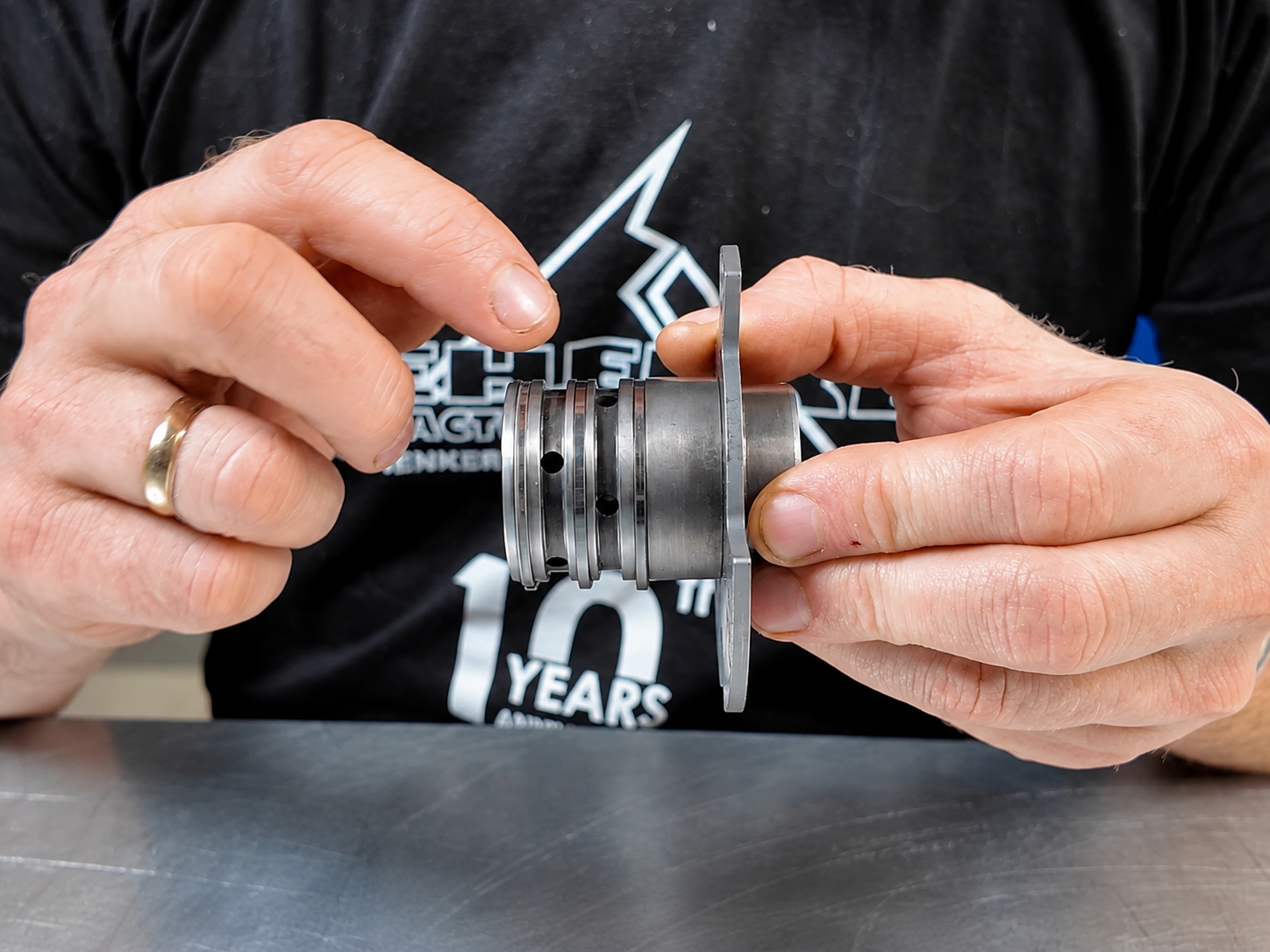
During service, the original steel sealing rings may:
- wear down,
- crack,
- break into pieces,
- or lose their correct shape and sealing ability.
Mercedes-Benz does not supply the steel rings separately. They are included only with the complete A1560520450 hub.
Current online listings are approximately $470 per hub. Because the engine uses four, purchasing complete OEM hubs only to obtain new sealing rings can cost close to $1,900.
Steel rings can cut grooves into the aluminum VVT oil distributor
The steel rings on the A1560520450 hub operate inside the smooth center bore of the aluminum VVT oil distribution housing, which is also listed in U.S. parts catalogs as the camshaft adjuster cover.
There are no factory-machined sealing grooves in this aluminum bore. The grooves visible in a worn part are created over time by friction between the hard steel rings and the softer aluminum housing.
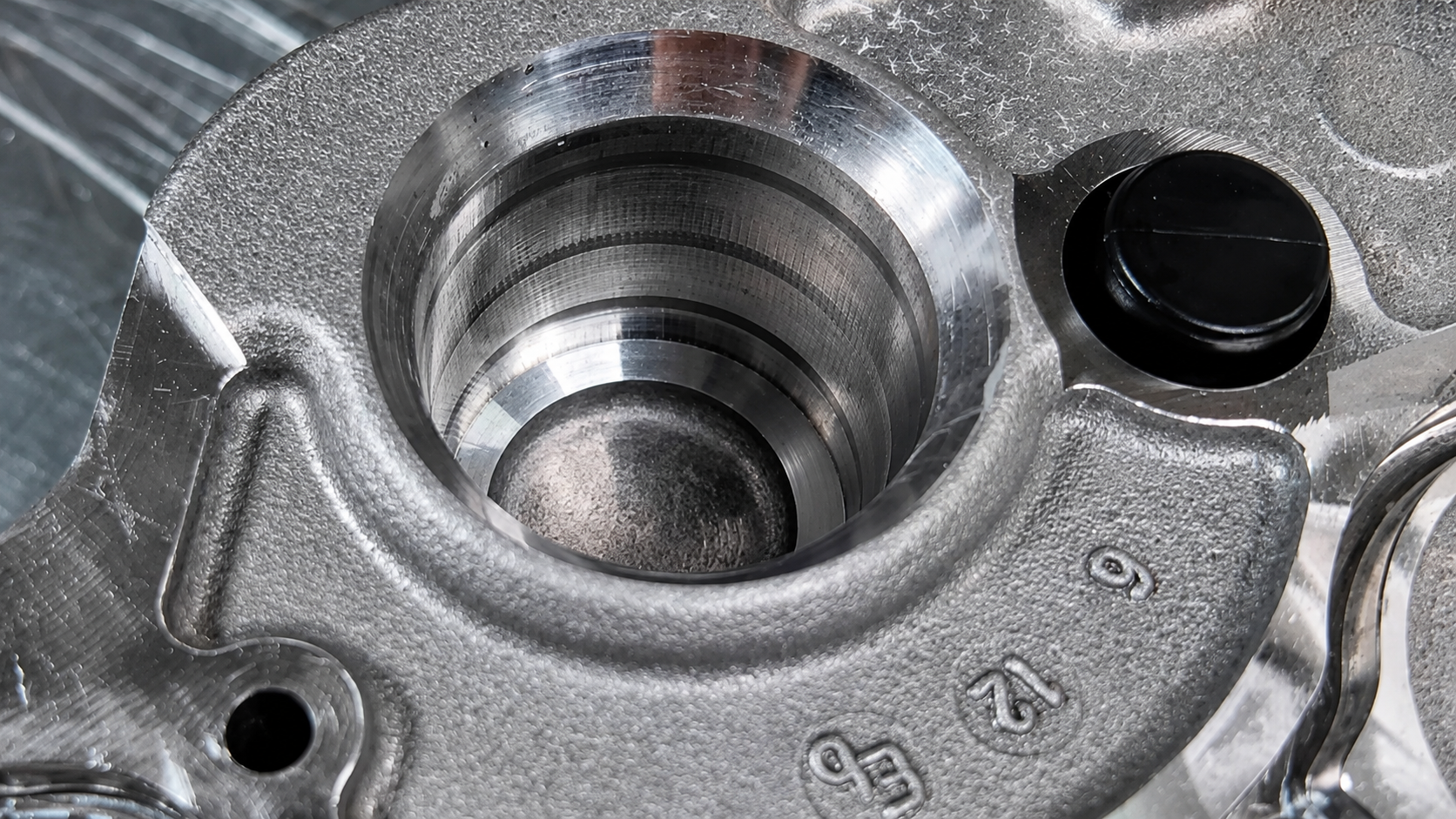
If the aluminum bore remains smooth and does not show significant wear, the housing does not need to be replaced. The original component can remain in service and only the sealing rings need to be changed.
If the steel rings have cut deep grooves into the aluminum, new rings may not restore proper oil sealing. In that case, the worn camshaft adjuster cover or VVT oil distributor housing may also require replacement.
The current OEM part numbers are:
- A1560500118 – one side,
- A1560500218 – opposite side.
Depending on the U.S. supplier, new genuine housings may cost roughly $800 to more than $1,000 each. They should not be included automatically in the standard repair cost because replacement is only necessary when the aluminum bores have already been damaged by the steel rings.
What M156 camshaft adjuster repair kits are available?
Several M156 camshaft adjuster rebuild kits are available online. In U.S. listings and owner forums, they may be described as:
- camshaft adjuster repair plate kits,
- cam adjuster lock plate kits,
- cam phaser rebuild kits,
- or M156 locking plate and pin kits.
Many of these products are sold by unknown manufacturers with little information about material specifications, dimensional inspection, quality control or warranty coverage.
The most basic kits contain only:
- replacement rear lock plates with a new locking-pin bore,
- and sometimes resurfaced front or top cover plates.
This type of repair may remove some of the internal clearance, but it does not always address every component that wears, breaks or disappears during service.
Many kits do not include:
- VVT sealing rings,
- spring seats or washers,
- new locking-pin springs,
- or a hardened wear insert in the locking-pin pocket.
MEHENKER repair plates use a hardened steel insert
The MEHENKER camshaft adjuster repair plates do not simply recreate the locking-pin pocket in the original plate material.
The area contacted by the locking pin is reinforced with a very hard steel insert or bushing.
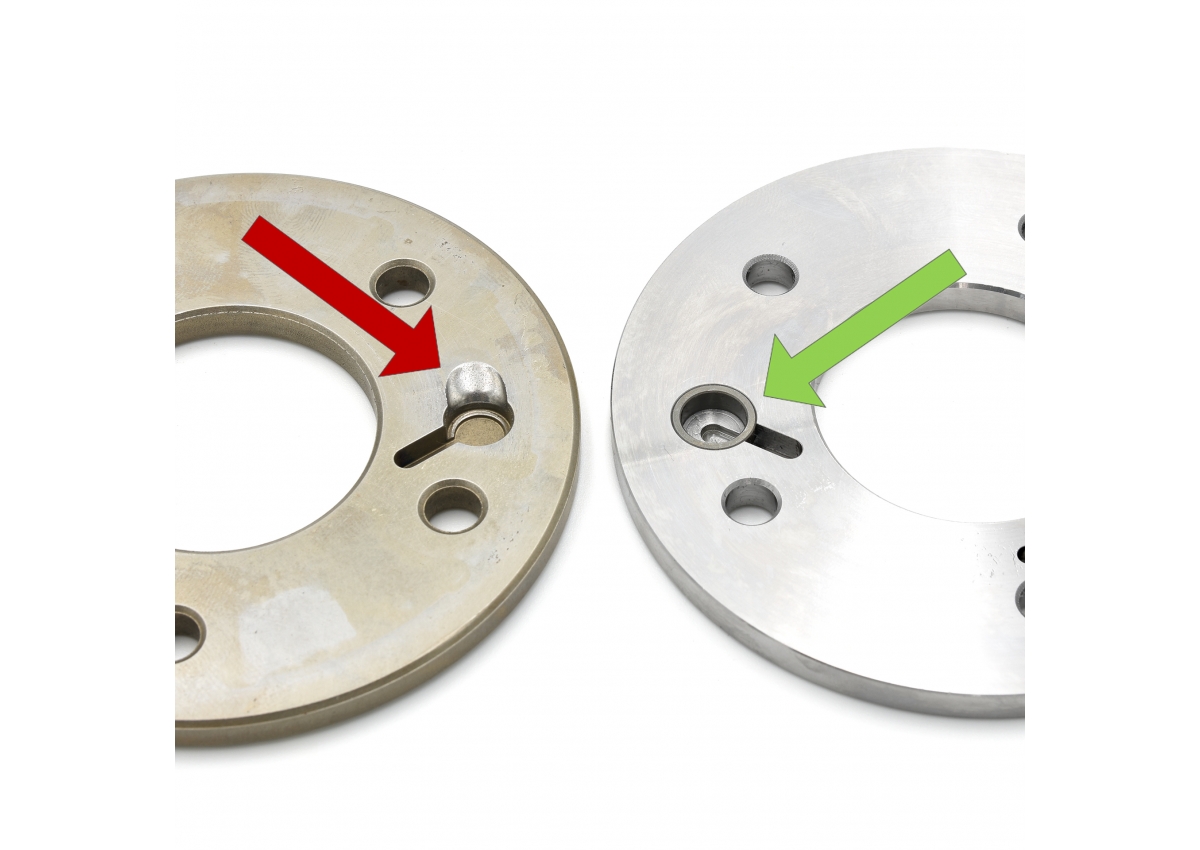
A similar design principle is used in the locking mechanisms of many newer cam phasers. The hardened insert directly absorbs the impact of the locking pin during startup.
This means the repair does more than reproduce the original wear-prone design. It reinforces the exact area that commonly fails.
Among the M156 rebuild kits we reviewed, the MEHENKER repair plate kit is the only one using this additional hardened insert inside the lock-pin pocket.
Low-friction blue MEHENKER sealing rings
The MEHENKER kit can also be supplied with a complete set of blue low-friction sealing rings for the A1560520450 camshaft pilot bushings or reluctor hubs.
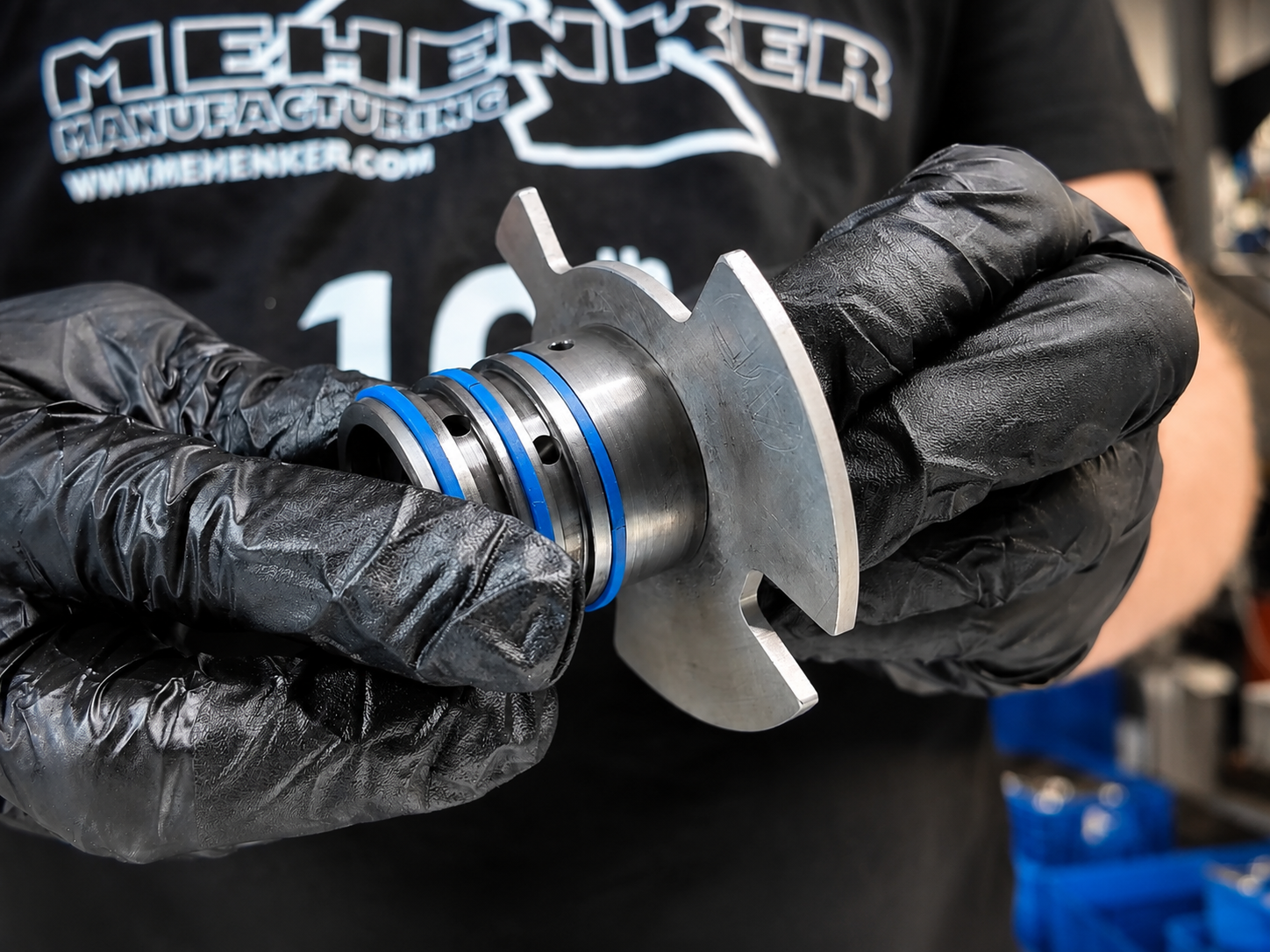
The rings are manufactured from a high-strength composite material with a very low coefficient of friction. They seal the separate VVT oil passages while reducing friction against the aluminum bore of the camshaft adjuster cover.
This helps reduce the risk of the deep wear grooves that can be cut into the aluminum by the original steel sealing rings.
The MEHENKER sealing rings are also available separately:
MEHENKER low-friction sealing rings for Mercedes-AMG M156 and M159
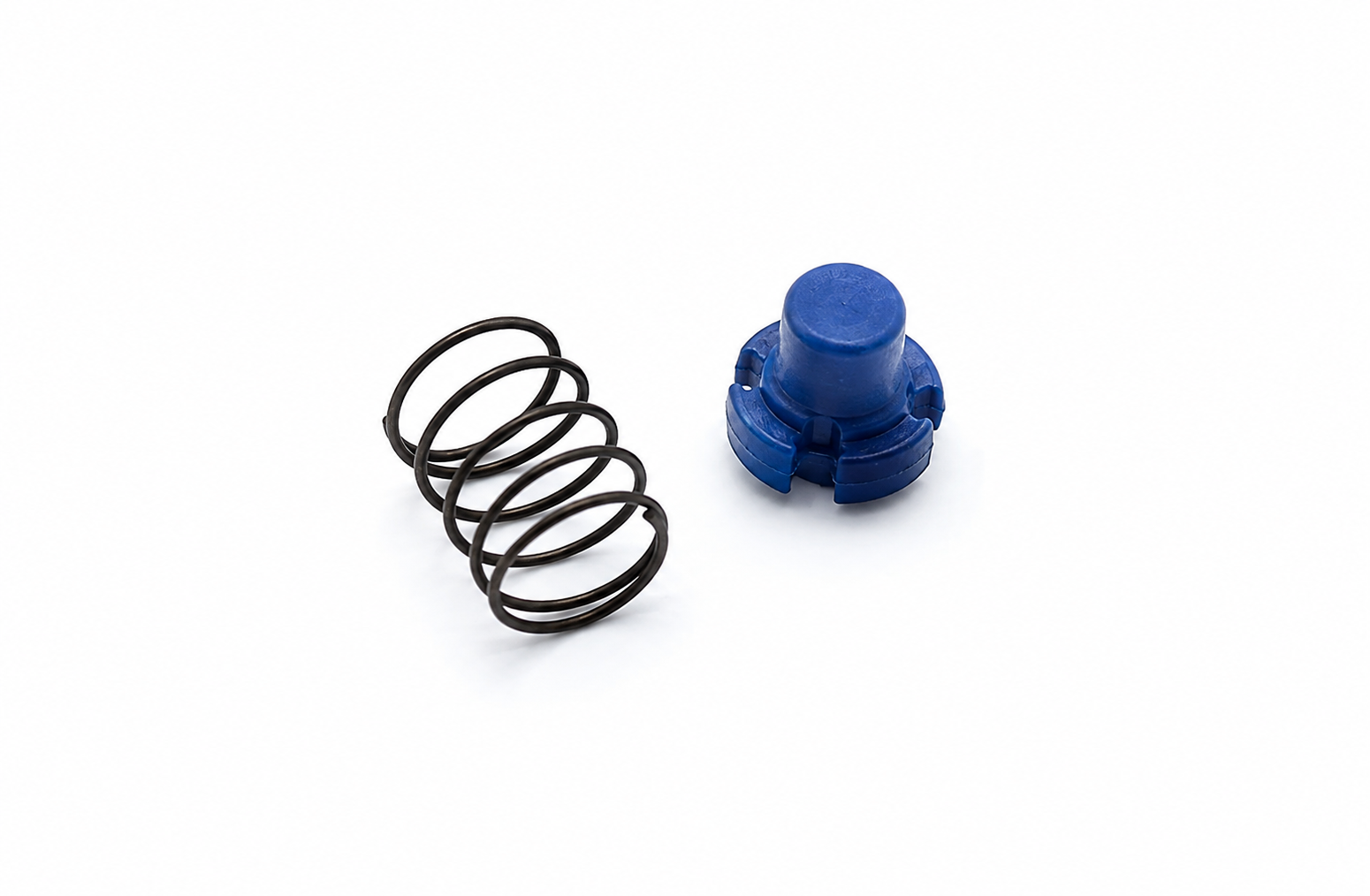
New spring seats and locking-pin springs
The complete MEHENKER camshaft adjuster rebuild kit also includes:
- spring seats made from a durable engineering polymer,
- new locking-pin springs,
- and the components required to rebuild all four camshaft adjusters.
This eliminates the need to reuse old springs or search for missing plastic spring seats that Mercedes-Benz does not sell separately.
MEHENKER rebuild kit for M156 and M159 engines
The MEHENKER kit is designed to rebuild all four camshaft adjusters used in:
- Mercedes-AMG M156 6.2-liter / 6.3 AMG V8 engines,
- Mercedes-AMG M159 6.2-liter V8 engines.
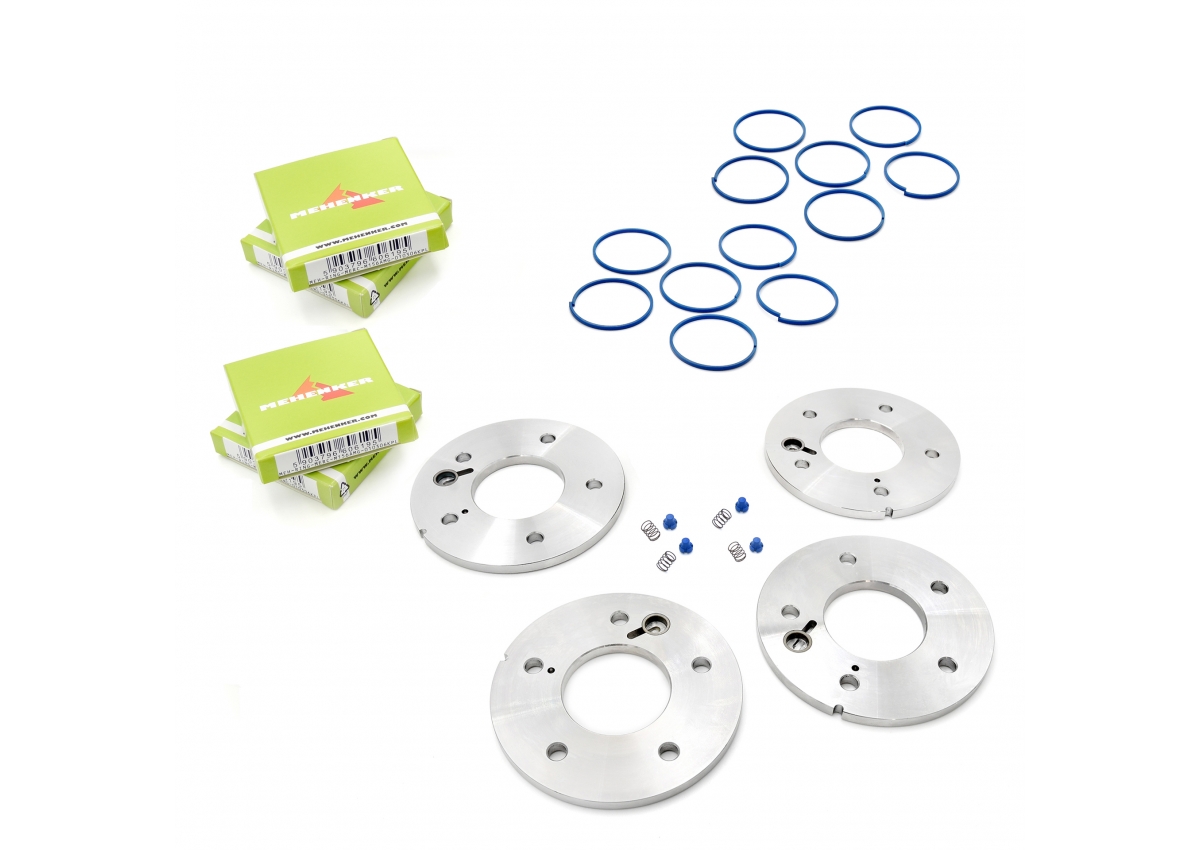
What is included in the kit?
- components required to rebuild all four camshaft adjusters,
- rear repair plates with hardened steel locking-pocket inserts,
- new locking-pin springs,
- spring seats made from a durable engineering polymer,
- blue low-friction VVT sealing rings.
The hardened steel insert is one of the most important parts of the MEHENKER design. Instead of simply recreating the original locking pocket, it reinforces the exact area that receives repeated impacts from the locking pin during engine startup.
The kit is covered by a 2-year manufacturer warranty with no mileage limit.
Can M156 camshaft adjusters be rebuilt at home?
Rebuilding the camshaft adjuster itself does not require complex machining equipment. However, it does require basic mechanical ability, a clean work area and patience.
Each adjuster must be carefully disassembled, cleaned and inspected. Pay close attention to:
- the position and orientation of every component,
- the direction of the springs,
- the presence of all spring seats and washers,
- the condition of the working surfaces,
- and free, positive operation of the locking mechanism.
This is not a repair that should be rushed. Accuracy and patience are essential.
Removing the camshaft adjusters from the engine and correctly setting M156 camshaft timing requires the proper Mercedes timing tools and a good understanding of the engine. Anyone without experience in camshaft timing work should have this part of the job performed by a qualified Mercedes-AMG specialist or engine machine shop.
Rebuild the original camshaft adjusters instead of replacing them
In many cases, the main housings, rotors and hydraulic components of the original M156 camshaft adjusters are still serviceable. The main failures are concentrated in the lock-pin pocket and in the small spring and sealing components.
Replacing the complete camshaft adjusters means discarding many precision-machined parts that are still usable simply because Mercedes-Benz does not offer the small internal components separately.
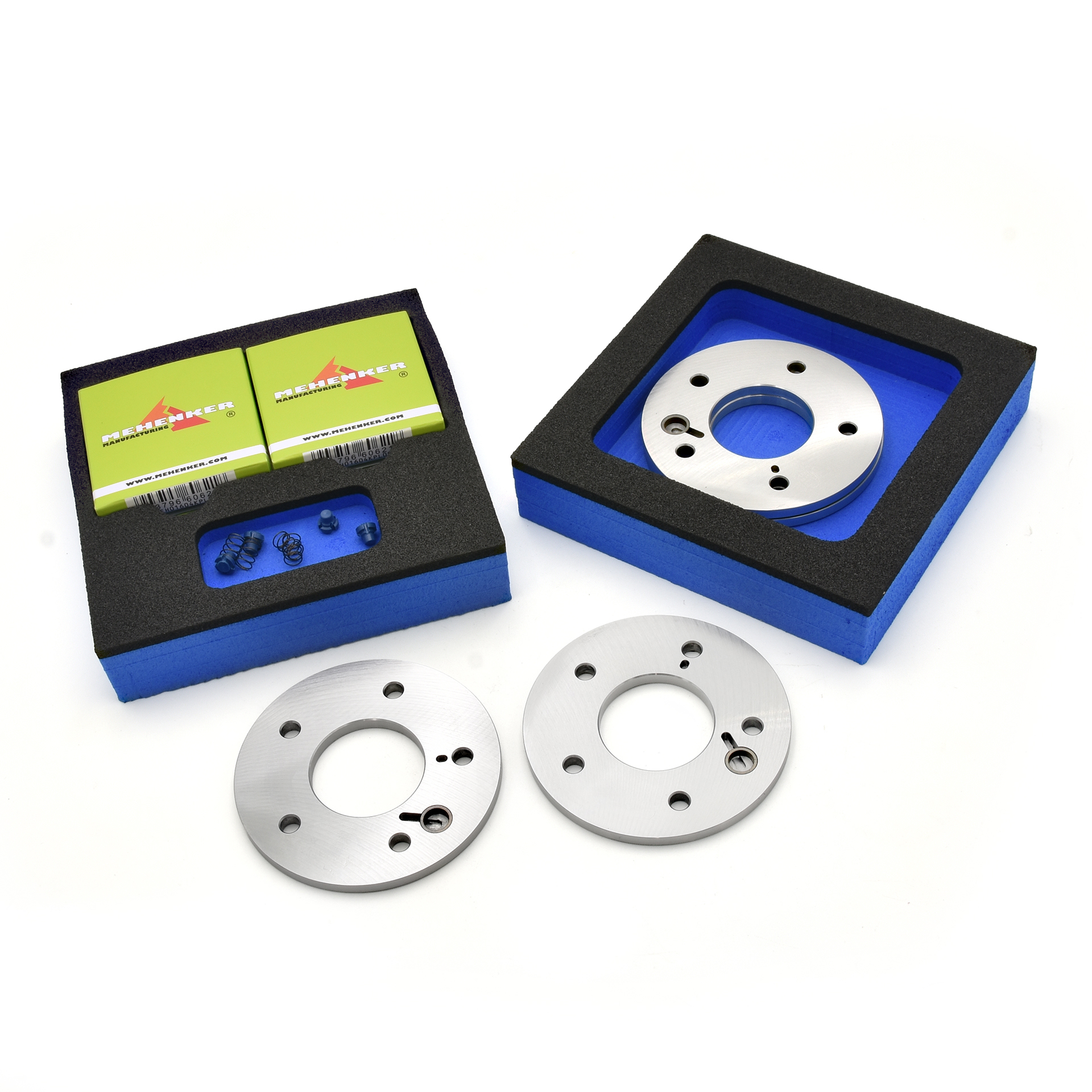
Using a complete camshaft adjuster rebuild kit can:
- restore positive cam phaser locking during startup,
- eliminate the characteristic M156 cold-start rattle,
- replace worn or broken sealing rings,
- replace missing spring seats and washers,
- install new locking-pin springs,
- and significantly reduce the total repair cost.
All four camshaft adjusters should be inspected carefully. If one adjuster is already rattling, the other three have usually covered the same mileage and may show similar wear even if they are not yet producing obvious symptoms.