
The BMW S55 crank hub is one of the most talked-about issues among F87 M2 Competition, F80 M3 and F82/F83 M4 owners. The same questions keep coming up on forums and Facebook groups: Can a stock S55 really spin the crank hub? Do I need a crank hub fix before going Stage 1 or Stage 2? Which solution gives the best protection without creating new risks during installation?
This guide covers the questions U.S. owners usually search for: “S55 crank hub failure,” “spun crank hub symptoms,” “do I need a crank hub fix before tuning,” “4-pin vs. one-piece crank hub,” and “best crank hub for an F80 M3 or F82 M4.”
The key takeaway: the S55 crank hub issue is real, but not every stock engine will experience a spun crank hub. If you decide to do the fix for peace of mind, it makes sense to choose a solution that does not require drilling the surface-hardened crankshaft and does not create metal shavings inside an open engine.
Watch the full BMW crank hub test
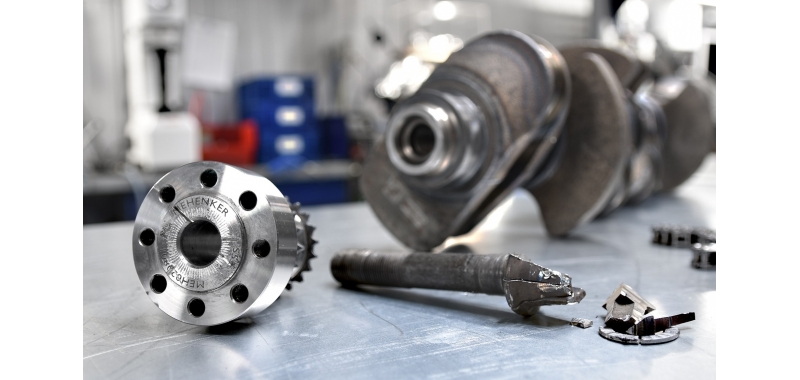
In our video, we compared the factory BMW crank hub with the MEHENKER one-piece crank hub. Both setups were installed on the crankshaft and subjected to the same removal test.
Watch the full video on YouTube
The factory setup came loose with normal shop tools. With the MEHENKER hub, neither a long breaker bar nor a professional impact gun could remove the bolt. We eventually had to cut the bolt to take the assembly apart. This was our own comparative shop test, not an independent laboratory ranking of every crank hub on the market.
What is the crank hub on the BMW S55 engine?
The crank hub sits on the front of the crankshaft and drives the timing system and oil pump. Owners and shops may also call it the crankshaft hub, timing hub, crank sprocket assembly or a spun crank hub.
The issue mainly applies to:
- F87 BMW M2 Competition and M2 CS,
- F80 BMW M3, M3 Competition and M3 CS,
- F82 BMW M4, M4 Competition, M4 CS and M4 GTS,
- F83 BMW M4 Convertible.
The original non-Competition F87 M2 used the N55 engine. The S55 was fitted to the M2 Competition and M2 CS.
Why can the stock S55 crank hub spin?
The factory BMW S55 crank hub is a multi-piece stack clamped to the crankshaft by one central bolt. Friction disks increase grip, but the sprockets are not permanently keyed or splined to the crankshaft.
Owners often say the crank hub “backed out” or “came loose.” In practice, the bolt may lose clamp load, the friction disks may slip, or the individual parts may rotate relative to each other. The result is lost cam-to-crank timing.
Can a stock S55 spin the crank hub?
Yes. Spun crank hubs have also been reported on stock cars. However, there is no reliable public failure-rate data, and many S55 engines run high mileage on the factory setup without an issue.
The risk deserves more attention on a tuned car, especially with Stage 1 or Stage 2 power, high torque, frequent launch control use, track days, drag-strip passes, roll racing or drifting.
What are the symptoms of a spun S55 crank hub?
- a Drivetrain Malfunction,
- Check Engine light and limp mode,
- rough running and misfires,
- loss of power,
- hard starting or a no-start condition,
- cam-to-crank correlation or timing codes,
- VANOS faults.
A spun hub does not always destroy the engine. If the timing shift is small, the repair may be limited to resetting the timing and replacing damaged parts. A larger timing jump can allow the valves to contact the pistons.
What types of S55 crank hub fixes are available?
- Crank bolt capture — mainly keeps the crank bolt from backing out, but does not change the factory multi-piece hub design.
- 2-pin or 4-pin hub — mechanically locks the hub, but requires drilling the crankshaft.
- Keyway — uses a keyway machined into the crankshaft.
- Spline Lock — uses a press-fit spline that bites into the crankshaft without drilling.
- MEHENKER — a one-piece hub with hardened microteeth driven into the crankshaft face by the full clamp load of the crank bolt.
Why is in-car crankshaft drilling a drawback of pinned hubs?
A 2-pin or 4-pin system can mechanically lock the hub, but it requires drilling holes into a finished crankshaft. The S55 crank is a forged, surface-hardened component that carries alternating torsional and bending loads while the engine is running.
Drilling means:
- cutting through the factory-hardened surface layer,
- removing material from a finished crankshaft,
- creating edges and notches that can increase local stress concentration,
- making hole quality dependent on the drill jig, tooling, alignment and installer skill,
- making a permanent and irreversible modification to the crankshaft.
We are not claiming that every correctly drilled crankshaft will crack. The concern is that these holes are usually drilled by hand into a surface-hardened crankshaft while it is still in the car, rather than machined under controlled production conditions.
Metal shavings from drilling the crankshaft in the car
The second issue is the steel chips and fine metal debris created next to an open timing system. A careful shop can reduce the risk with shielding, vacuum extraction and thorough cleaning. It cannot change the basic difference: a pinned hub creates drilling debris; a no-drill solution does not.
Any debris left behind may reach the timing chain, sprockets, guides or oil pump. Once carried by the oil, those particles can threaten the VANOS system, camshaft bearing surfaces and other precision lubricated components.
The question should not only be, “Will four pins hold the hub?” A better question is, “Why drill a hardened crankshaft if the hub can be mechanically locked without drilling holes?”
BMW S55 crank hub comparison
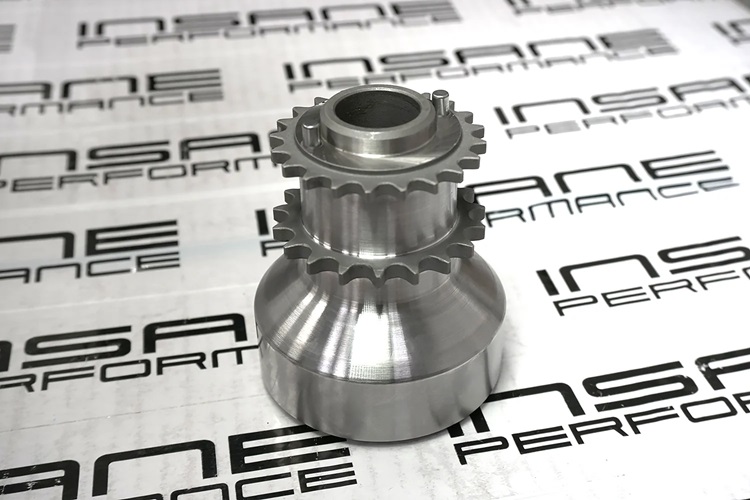
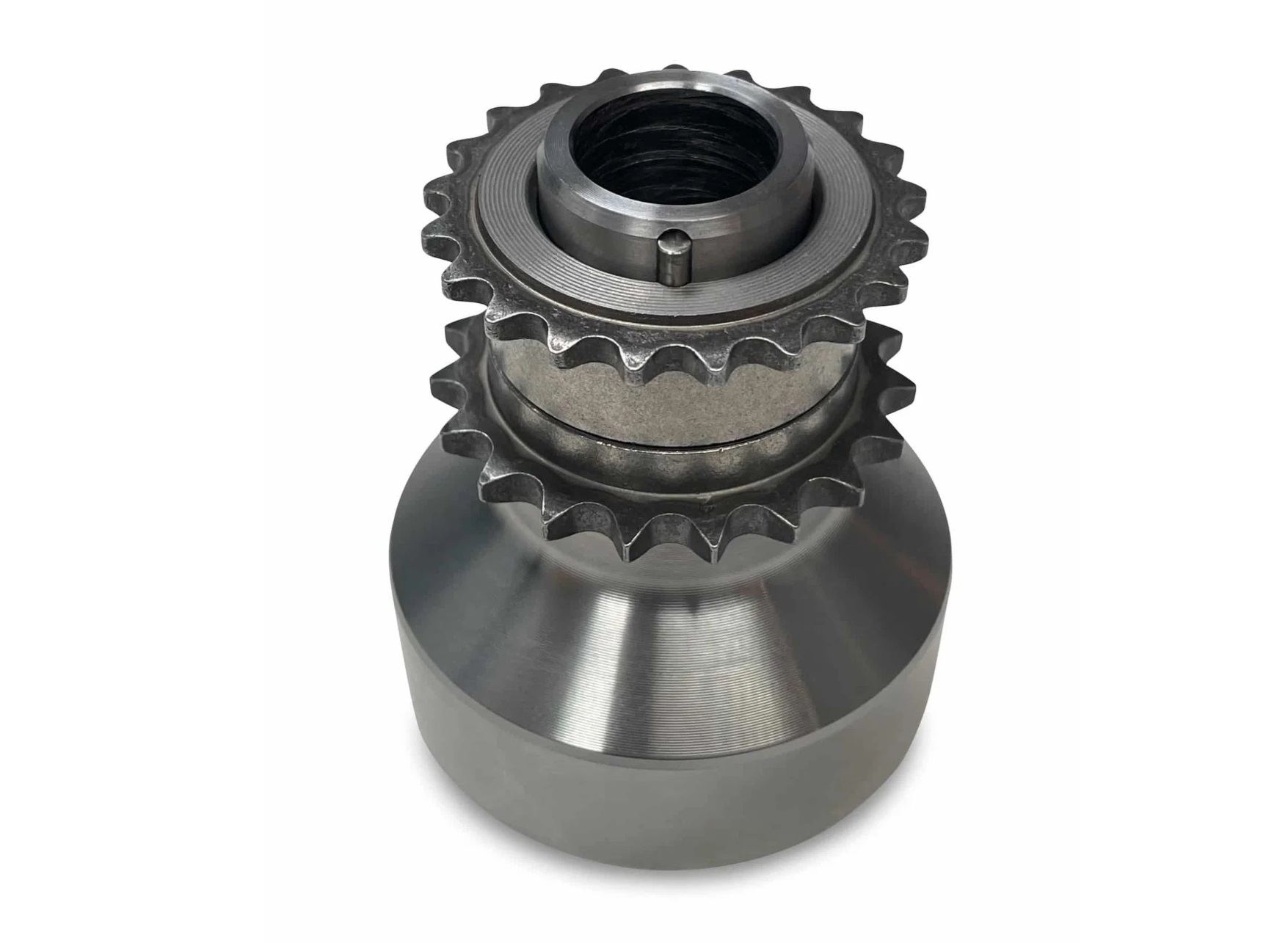
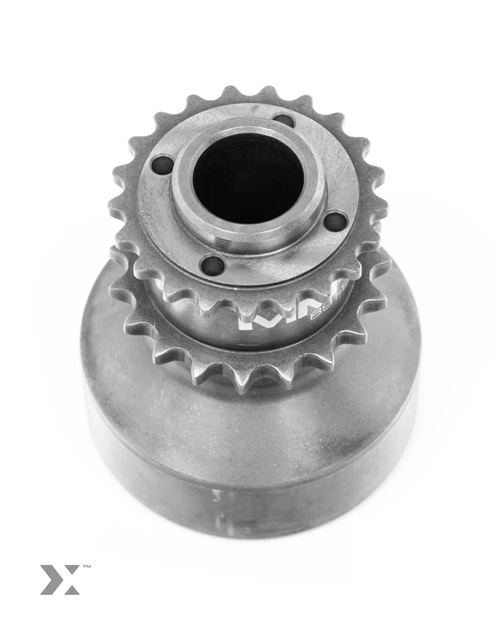
How to read this comparison: each solution has its own card with a larger product photo and the same set of key points, making it easier to compare on desktop and mobile.
Methodology: this comparison is based on publicly described design features. It is not an independent destructive test of every product. Statements about MEHENKER advantages are the manufacturer’s engineering assessment based on load transfer, part count and the amount of crankshaft modification required.
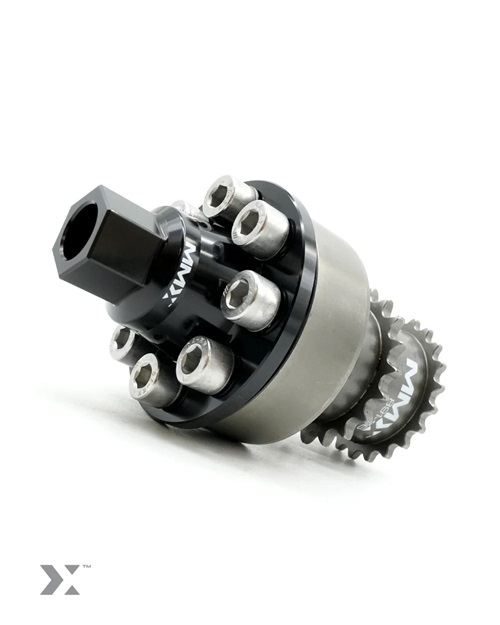
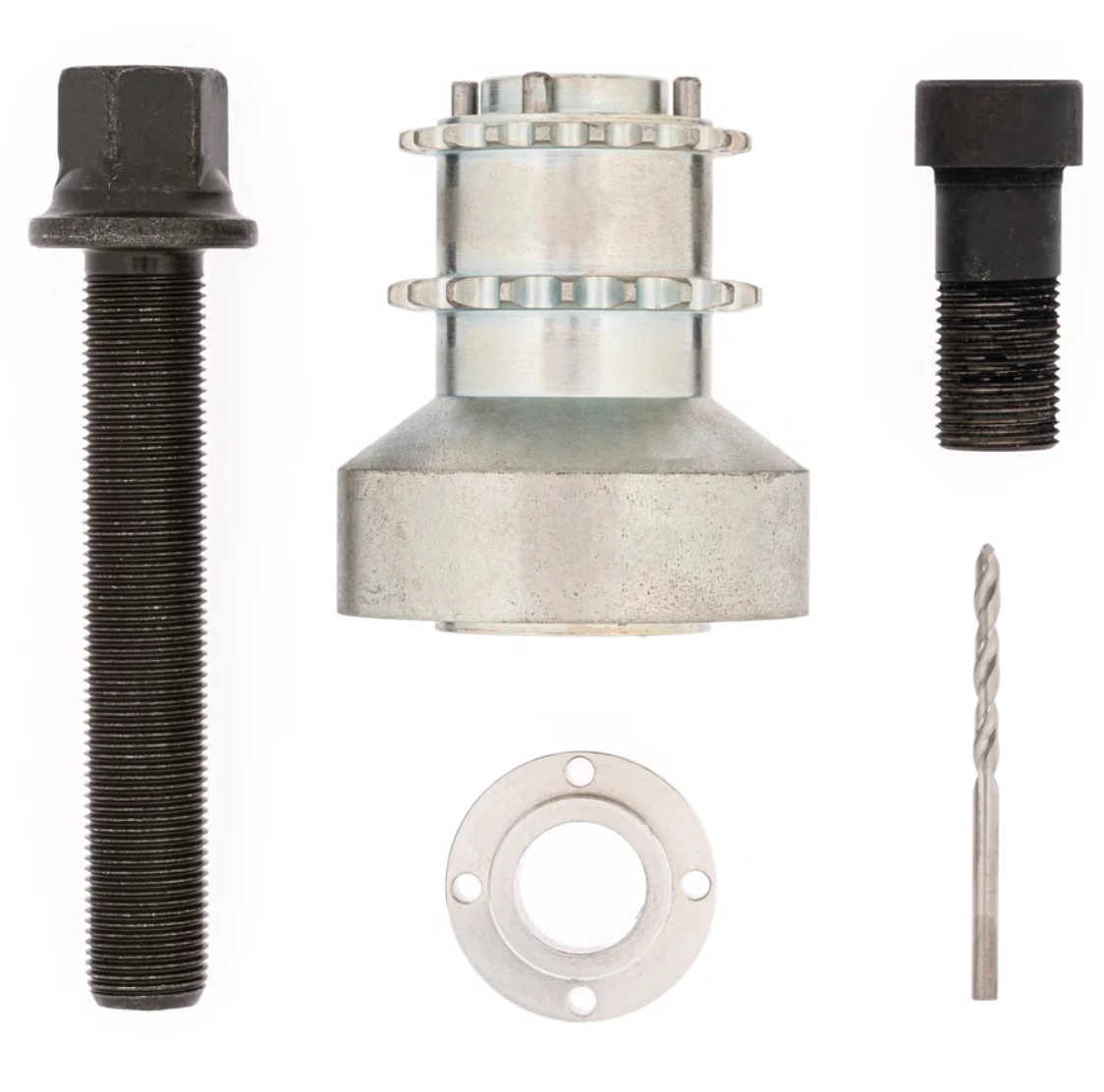
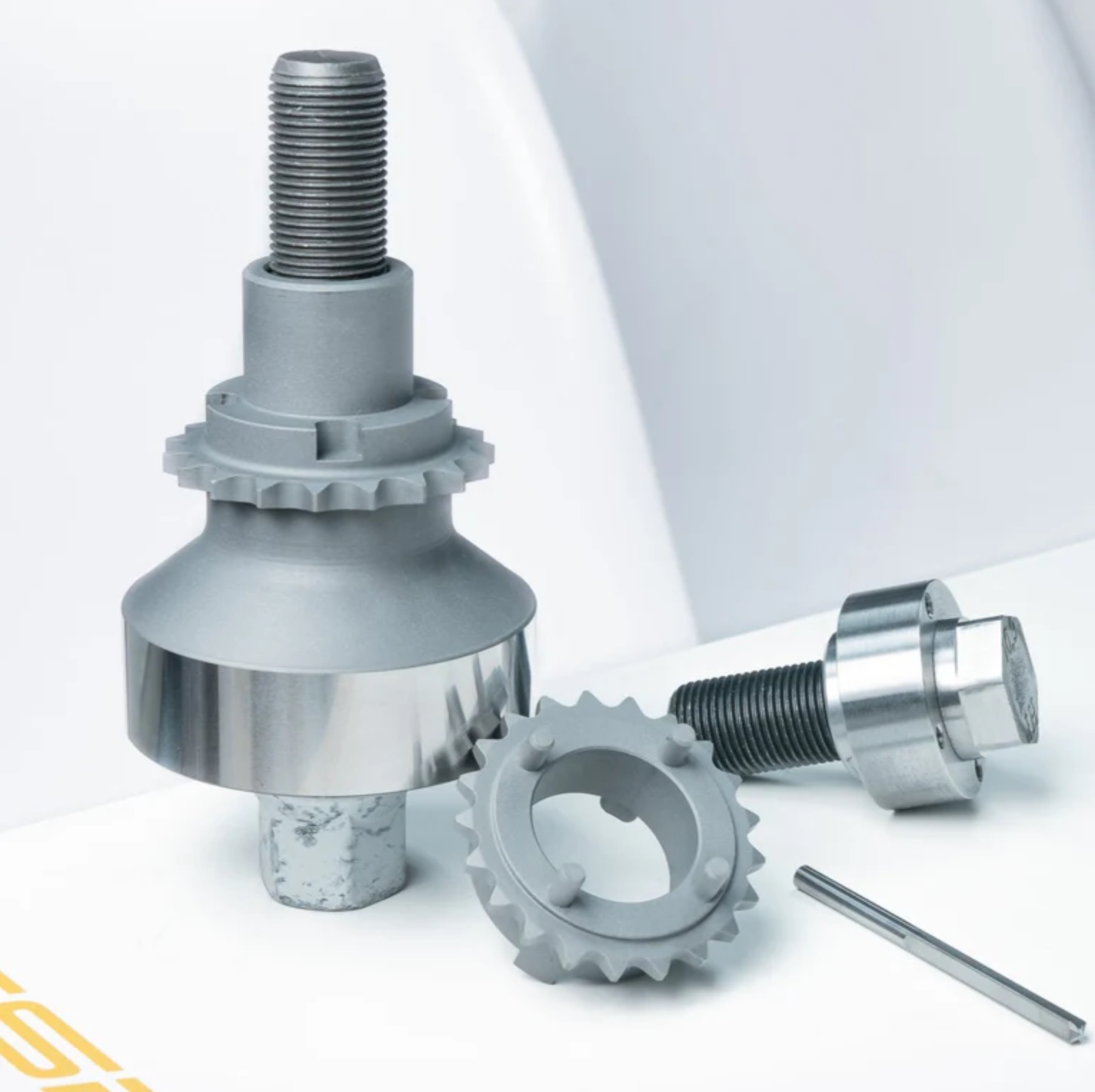
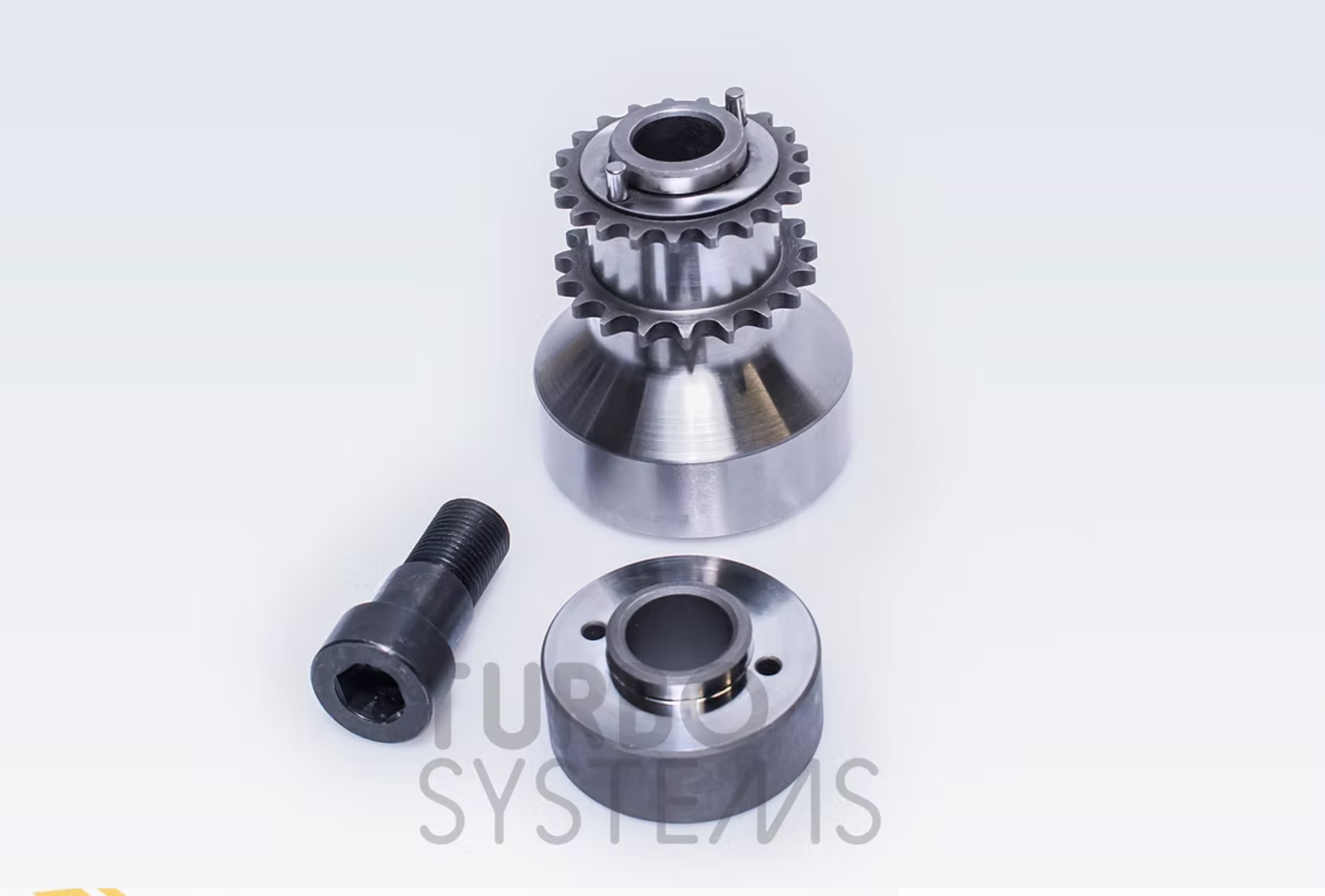
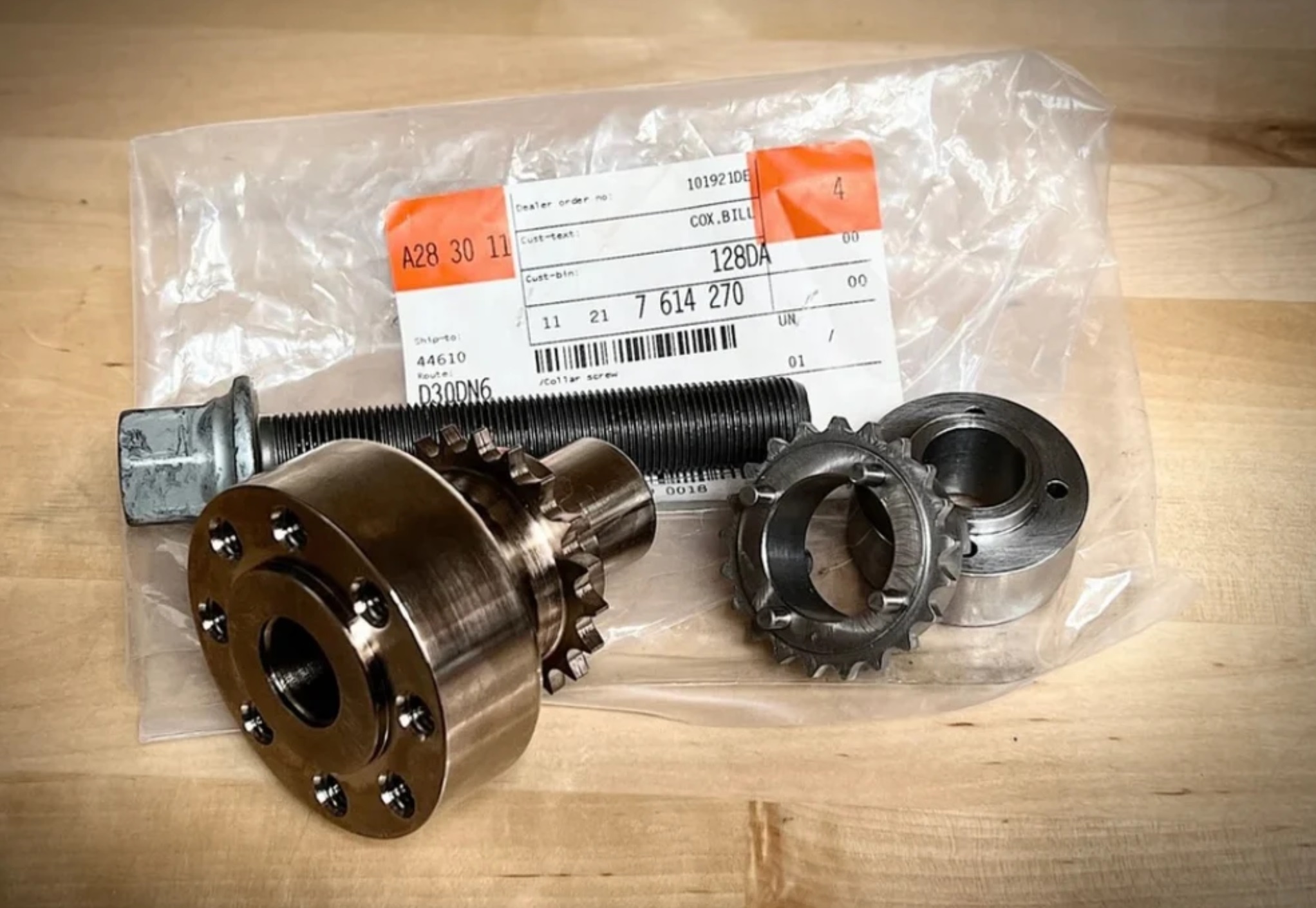
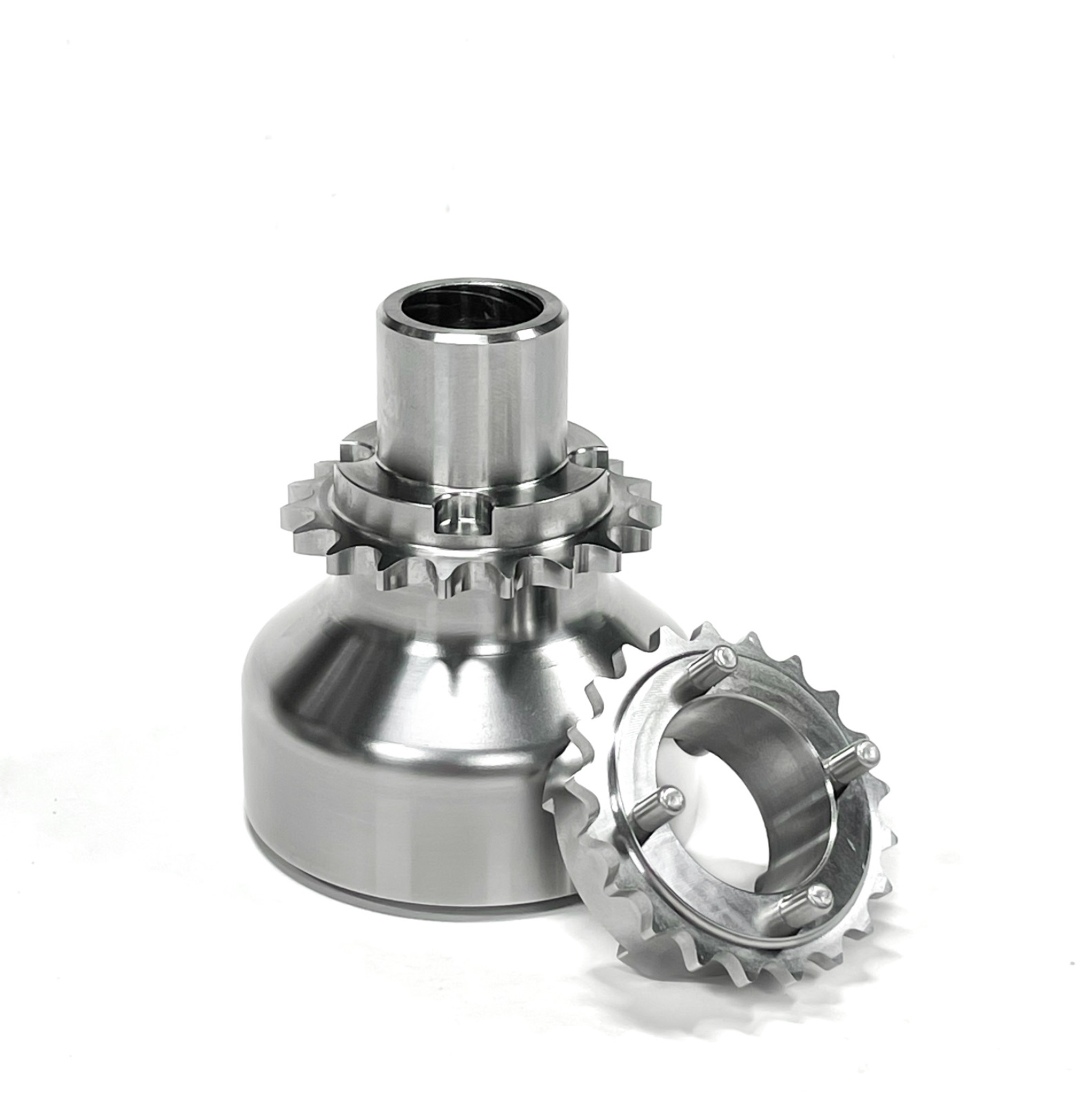
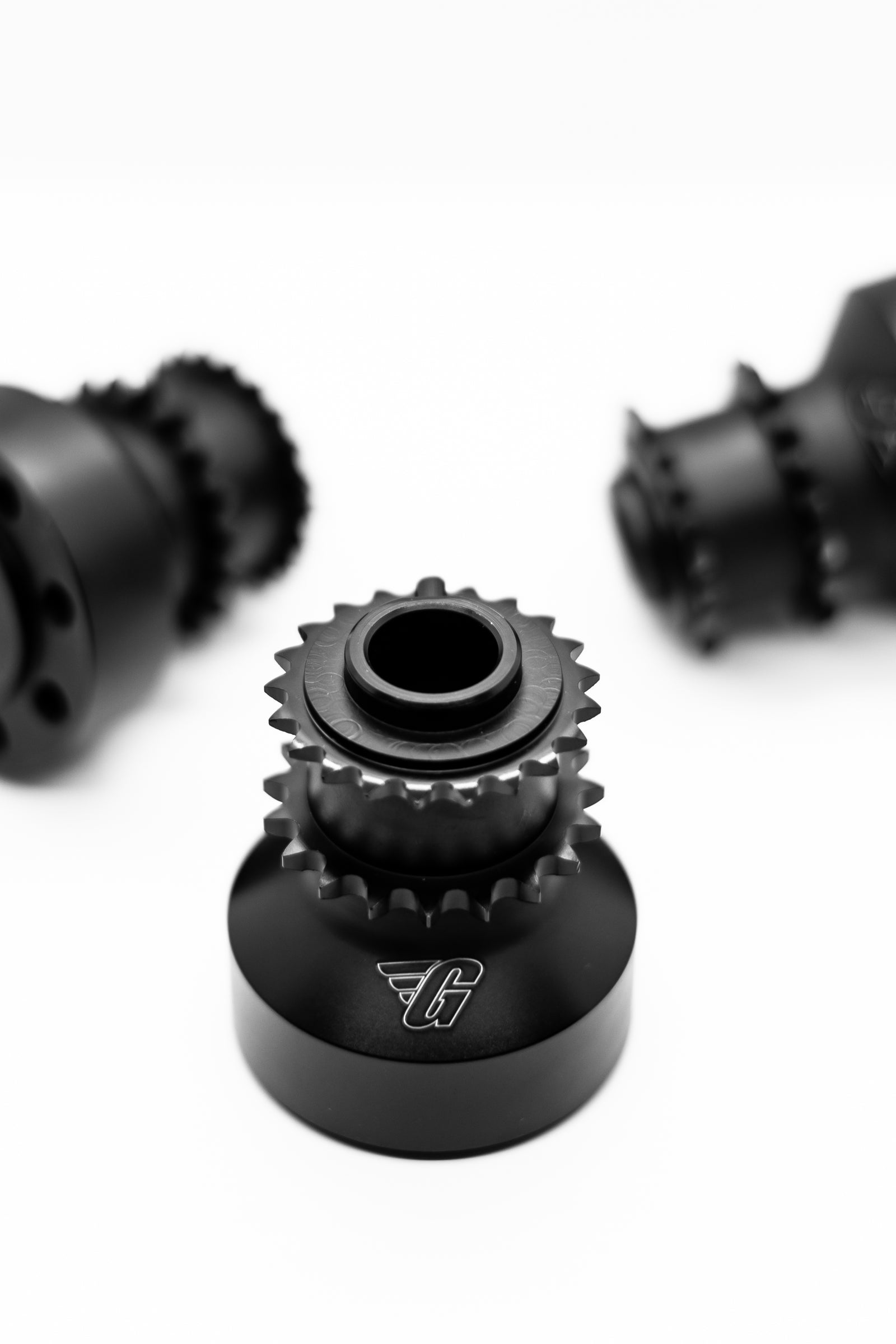
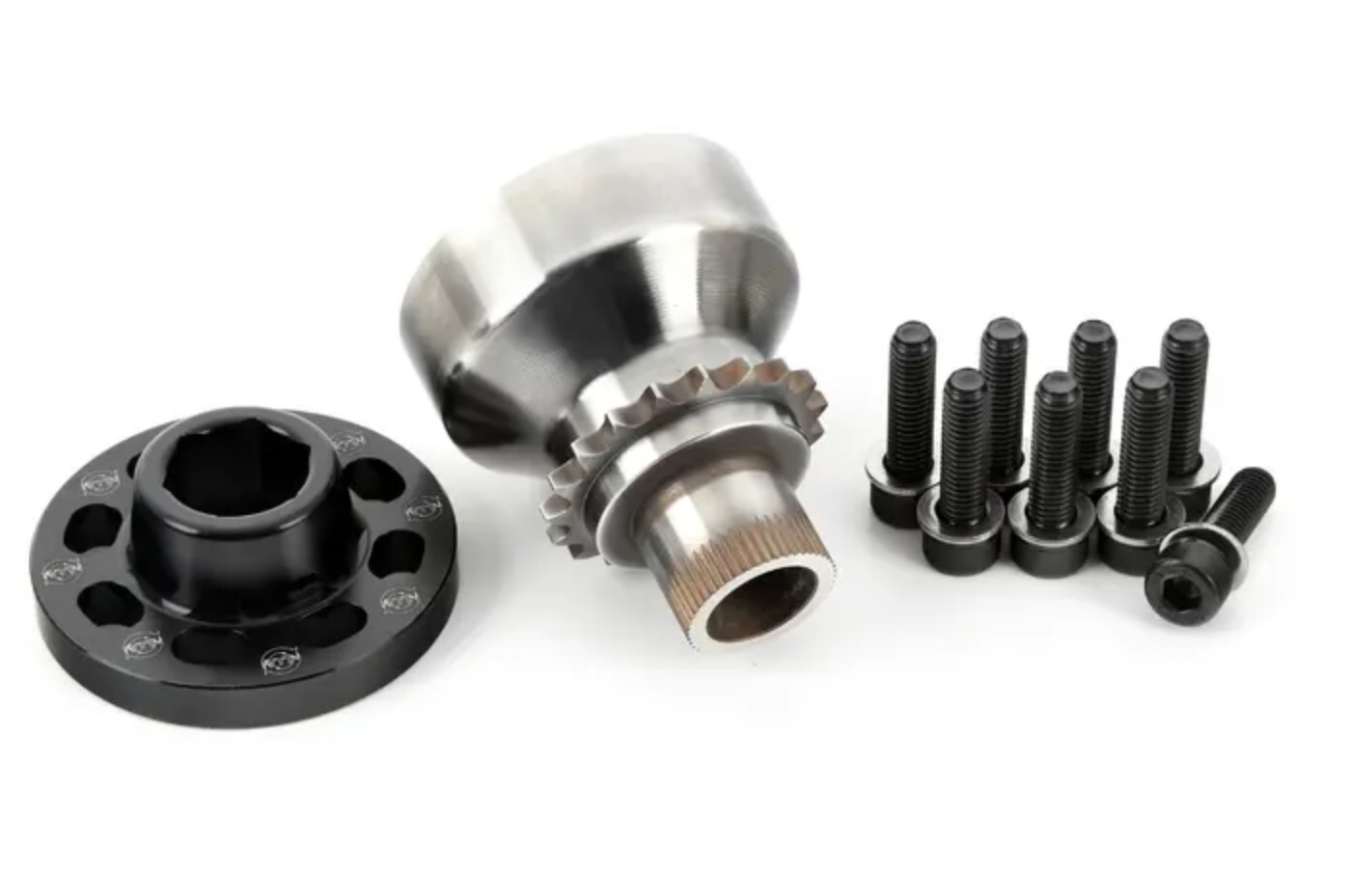
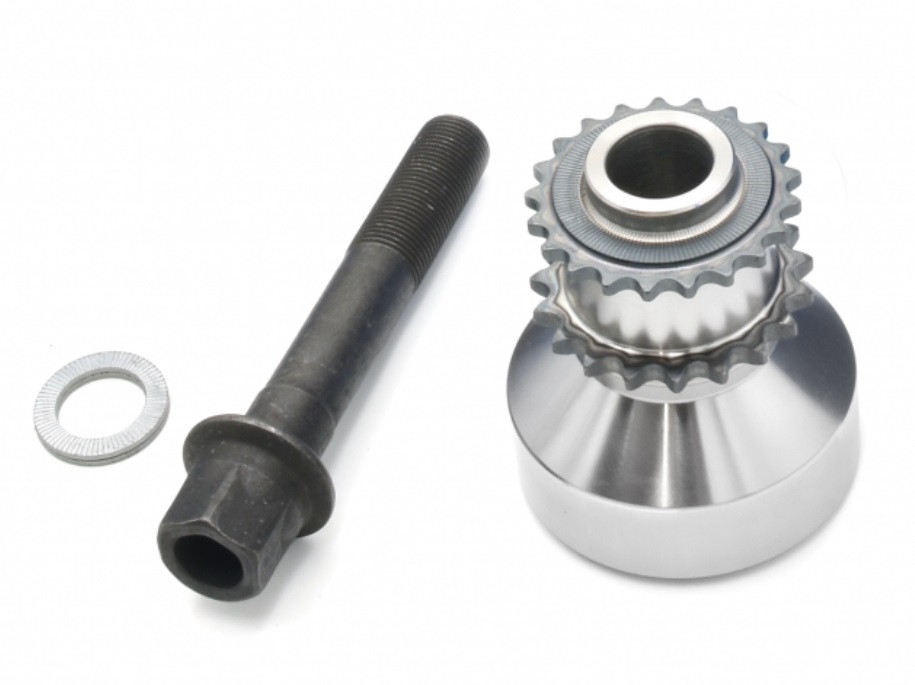
MEHENKER vs. Vargas VTT Spline Lock: the key difference
VTT Spline Lock is the closest competing concept because it also avoids drilling the crankshaft. However, the two systems should not be described as working the same way.
The VTT system uses a precision-machined spline installed with a controlled interference fit. As it is pressed in, the teeth form matching grooves in the crankshaft and create 360-degree mechanical engagement. Initial seating and long-term stability therefore depend heavily on the accuracy of the radial spline fit.
MEHENKER works differently. Its microteeth are located on the front face of the hub. During installation, the full axial preload of the crank bolt drives them into the crankshaft face and keeps them mechanically engaged. Torque is transferred at a large effective radius, while the Nord-Lock washer helps prevent loss of bolt preload.
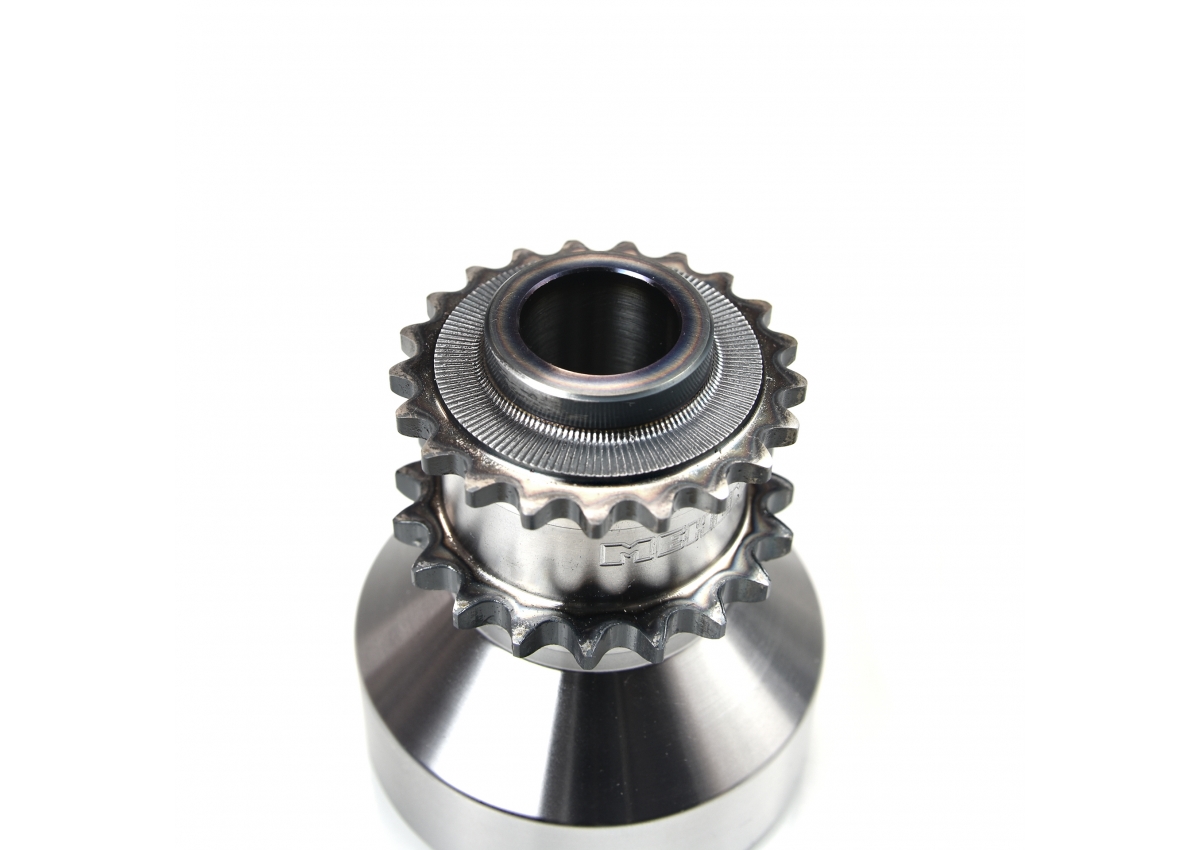 MEHENKER microteeth detail showing the mechanical locking surface that engages the crankshaft face.
This means MEHENKER load capacity does not primarily depend on achieving a specific interference fit inside the hub bore. It comes from the combination of:
- mechanical engagement of hardened microteeth,
- the full axial clamp load of the crank bolt,
- a large effective torque-transfer radius,
- a one-piece hub with integrated sprockets,
- bolt-preload retention with a Nord-Lock washer.
In our engineering assessment, this gives the MEHENKER design more reserve capacity under alternating loads than a solution whose seating depends mainly on a controlled radial interference fit. We do not claim a numerical advantage over VTT because we have not performed a direct, standardized destructive test of both products.
Why is MEHENKER a simpler crank hub fix?
The MEHENKER crank hub combines the following in one system:
- the hub and both sprockets machined from one piece,
- induction-hardened sprocket teeth,
- hardened microteeth that lock the hub to the crankshaft face,
- a Nord-Lock washer to help retain crank-bolt preload,
- no drilling and no steel shavings,
- no pins, keyway or separate crank bolt capture.
Fewer parts and fewer extra operations mean fewer opportunities for installation error. The MEHENKER hub does not require hand-drilled holes, pin alignment or a specific spline interference fit.
Track tested in a 1,000+ hp S55 BMW
The MEHENKER crank hub was run in a BMW with a 1,000+ hp S55 during real track driving.
Track use stresses the connection with more than peak horsepower. The hub must handle hard acceleration, sudden throttle lift, engine braking, downshifts, rapid gear changes and repeated load reversals.
Among the designs in this comparison, MEHENKER is the one we have personally verified on track in a 1,000+ hp S55 BMW. That does not mean other manufacturers have not performed their own testing. It means we have direct first-hand experience with MEHENKER in this type of use.
BMW S55 crank hub FAQ
Do I need a crank hub fix before Stage 1?
Not on every car, but it is worth considering for peace of mind, especially with hard use, high torque or plans to move to Stage 2.
Is a crank bolt capture enough?
A crank bolt capture mainly keeps the bolt from rotating. It does not change the stock multi-piece hub design or mechanically lock every sprocket to the crankshaft.
Is a 4-pin crank hub better than a 2-pin hub?
Four pins distribute load across more points, but both approaches require drilling the crankshaft. Durability also depends on hole quality and location, pin material and installation accuracy.
Does the MEHENKER crank hub require drilling?
No. The central crank bolt drives the microteeth into the crankshaft face.
Do the MEHENKER microteeth damage the crankshaft?
They leave a controlled imprint on the crankshaft face because that is how the mechanical lock is created. However, they do not require deep holes, a keyway or material removal in the form of metal chips.
Can MEHENKER be called stronger than VTT?
We have not run both products through the same destructive test, so we do not claim a numerical advantage. From an engineering standpoint, MEHENKER uses the full axial crank-bolt clamp load at a large radius rather than relying mainly on radial spline interference. For that reason, we assess it as having more reserve capacity under alternating loads.
Which BMW S55 crank hub fix should you choose?
A 2-pin, 4-pin or keyway hub can mechanically secure the assembly, but each requires permanent crankshaft machining. VTT Spline Lock avoids drilling, but relies on a precision spline interference fit and an additional crank bolt capture.
MEHENKER locks the crank hub without drilling and without a separate capture plate. The hub and both sprockets are made as one part, while hardened microteeth are driven into the crankshaft face by the full clamp load of the crank bolt. The result is a simple, rigid system with less dependence on extra installation steps.
Key MEHENKER advantages:
- no drilling into a surface-hardened crankshaft,
- no metal shavings created during installation,
- one-piece hub with integrated sprockets,
- mechanical locking through microteeth driven by the full crank-bolt clamp load,
- Nord-Lock washer instead of an additional capture plate,
- shop testing and real track use in a 1,000+ hp S55 BMW.
Shop the MEHENKER BMW S55/N55 crank hub
Technical references and product pages
- Vargas VTT — official Spline Lock product page
- Vargas VTT — interference-fit and spline-engagement explanation
- MEHENKER — official product page
- INSANE Performance — official product page
- CarBahn — official product page
- MMX/MMR 4-Pin — official product page
- MMX/MMR Capture Plate — official product page
- NRW Design — official product page
- SSR Performance — official product page
- RK Autowerks — official product page
- Gintani — official product page