
The Alfa Romeo 1.75 TBi, also known as the 1750 TBi, is a turbocharged direct-injection petrol engine equipped with a variable valve timing system. It was used in models including the Alfa Romeo 159, Brera, Spider, Giulietta, 4C and 4C Spider, as well as the Lancia Delta. The most common engine codes include 939 B1.000, 940 A1.000, 940 B2.000 and 960 A1.000.
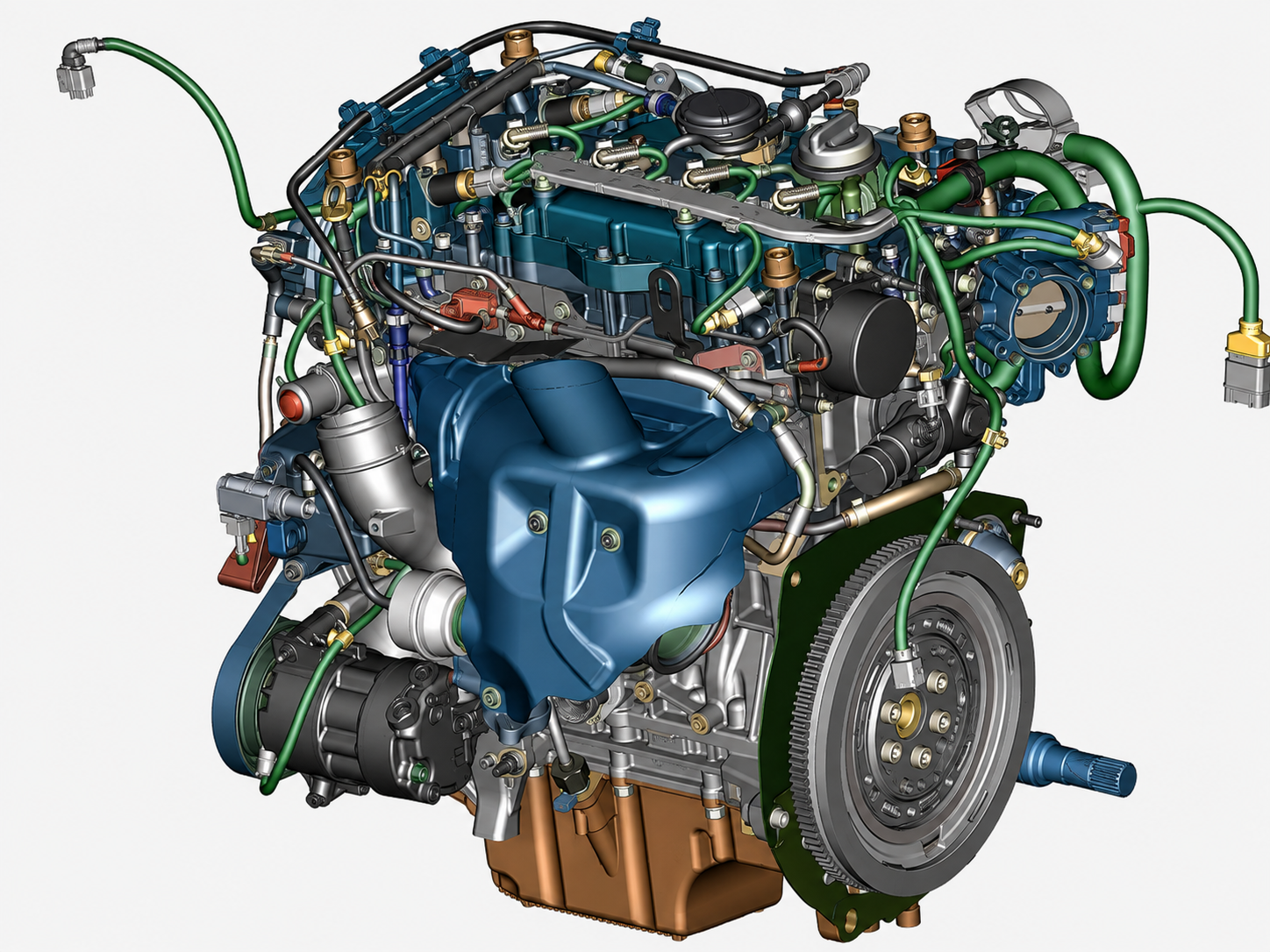 Alfa Romeo 1.75 TBi engine.
The two most characteristic symptoms of worn cam phasers in the 1.75 TBi are rattling immediately after engine startup and rattling when lifting off the throttle. Importantly, these two noises can be caused by two different types of failure within the same component.
As wear becomes more severe, the ECU may also start logging camshaft timing or cam/crank correlation faults. Correct diagnosis is not always straightforward because many commonly used diagnostic programs do not display the actual exhaust camshaft position, even though the ECU itself receives and uses this signal.
The cause may be worn cam phasers, also commonly referred to as camshaft variators, VVT actuators or camshaft adjusters.
Watch How the 1.75 TBi Cam Phasers Work
In our video we show the internal design of the original INA cam phasers, their most common wear points and the differences between the OEM design and the completely redesigned MEHENKER cam phasers.
Watch the full video on YouTube
Timing Belt and Two Hydraulic Cam Phasers
The Alfa Romeo 1.75 TBi uses a toothed timing belt to drive the camshafts. However, both camshafts are equipped with hydraulically controlled variable valve timing units:
- intake cam phaser,
- exhaust cam phaser.
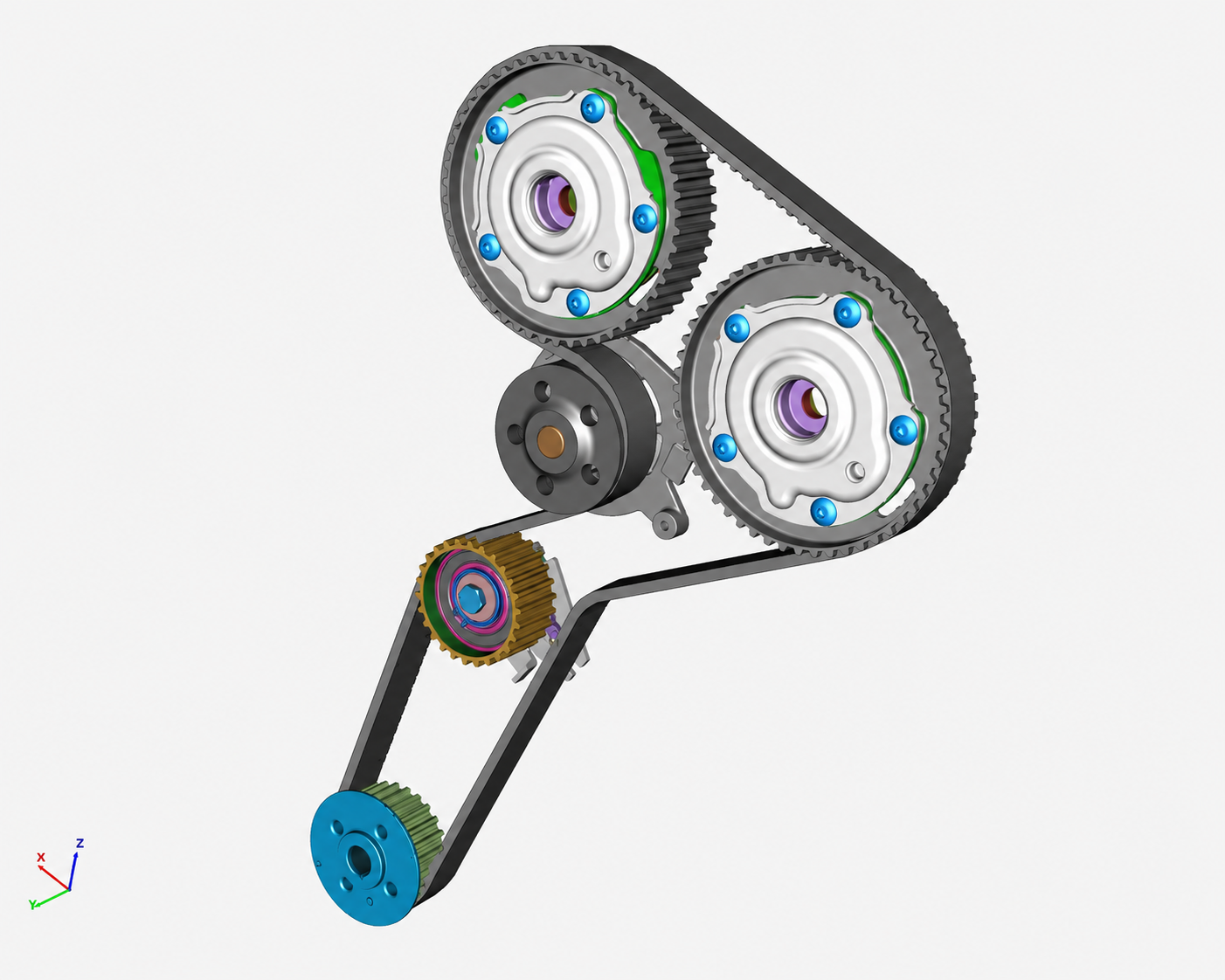 The 1.75 TBi uses a toothed timing belt, while both camshafts are equipped with hydraulic VVT cam phasers.
The intake cam phaser has an adjustment range of 30 degrees at the camshaft, which corresponds to 60 degrees of crankshaft rotation.
The exhaust cam phaser has an adjustment range of 26 degrees at the camshaft, corresponding to 52 degrees at the crankshaft.
The ECU controls the phasers through oil control solenoids. Depending on engine operating conditions, the relevant solenoid directs pressurised engine oil into one of the phaser chambers. The resulting pressure difference rotates the internal rotor relative to the outer section of the phaser driven by the timing belt.
This changes the angular position of the camshaft relative to the crankshaft and therefore changes the opening and closing timing of the valves.
The variable valve timing system helps improve:
- the torque curve,
- throttle response,
- cylinder filling,
- fuel consumption,
- exhaust emissions.
Original INA Cam Phasers
The original cam phasers used in the 1.75 TBi engine are manufactured by INA, a brand belonging to the Schaeffler Group.
The OEM part numbers are:
- 55215215,
- 55215216.
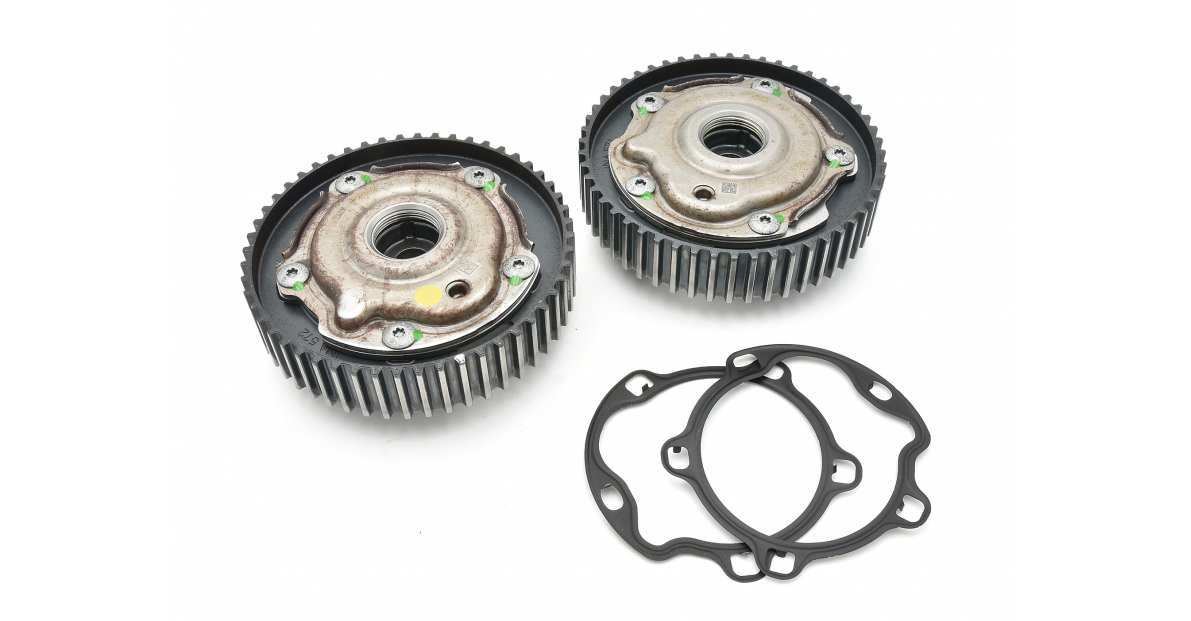 Original INA cam phasers used in the Alfa Romeo 1.75 TBi engine.
The original INA units use a vane-type design. Inside the housing is a rotor whose position changes under engine oil pressure.
An important feature of this design is the vanes themselves. They are not an integral part of the rotor. They are separate moving components installed in dedicated slots machined into the rotor.
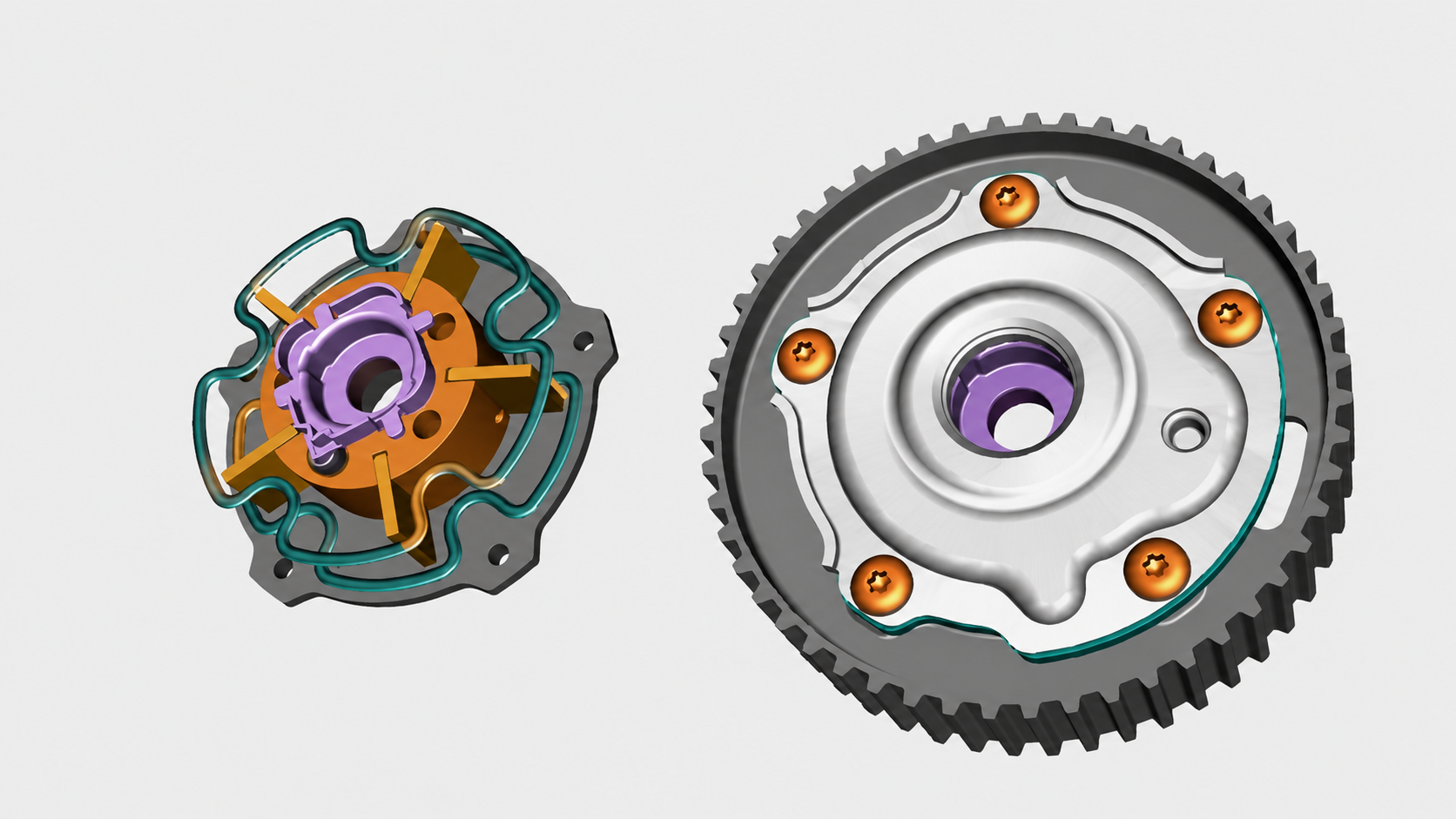 In the INA design, the vanes are separate components installed in slots in the rotor.
This design allows the individual oil chambers to be sealed, but it also introduces additional moving parts that can wear, jam or, in extreme cases, become damaged as mileage increases.
Most Common Symptoms of Worn Cam Phasers
The most typical symptoms of worn cam phasers in the 1.75 TBi include:
- rattling for a few seconds after engine startup,
- rattling when lifting off the throttle,
- metallic noise on overrun or during engine braking,
- camshaft timing or correlation fault codes,
- slow VVT response,
- failure to reach the commanded camshaft position,
- rough engine operation,
- poor throttle response,
- check engine light.
The type of noise can often help identify which part of the cam phaser is worn.
Rattling During Engine Startup
One of the best-known symptoms of worn cam phasers in the Alfa Romeo 1.75 TBi is a short rattle immediately after starting the engine.
The noise can last from a fraction of a second to several seconds. It then usually disappears and the engine continues to run normally.
After the engine is switched off, oil pressure drops. The cam phaser should be held in its base position by an internal locking mechanism. During the next startup, the locking pin should keep the rotor in this position until the oil pump builds sufficient pressure.
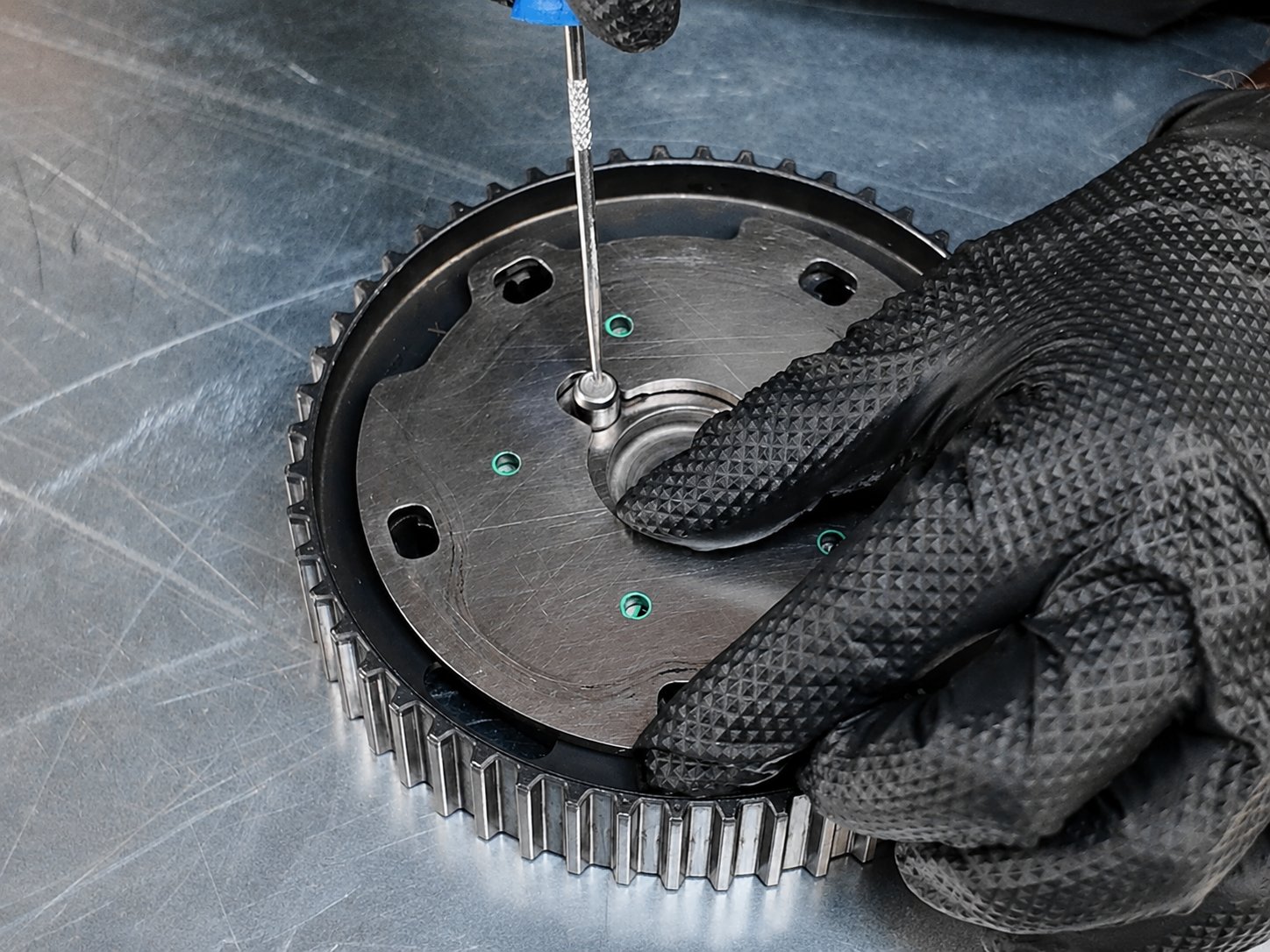 The locking mechanism keeps the rotor in its base position until sufficient engine oil pressure is available.
If the locking pin or its locking pocket is worn, the rotor is no longer held securely. Alternating loads from the camshaft can then move the rotor back and forth inside the phaser and make it hit the mechanical stops.
The driver may hear this as:
- metallic knocking,
- ticking or clattering,
- a short rattle from the timing belt / cylinder head area.
Excessive internal oil leakage can cause similar symptoms. If oil drains too quickly from the internal chambers, the cam phaser takes longer to refill and stabilise after startup.
Rattling When Lifting Off the Throttle
Another very characteristic problem is rattling when lifting off the throttle, particularly during the transition from acceleration to overrun.
It is most commonly heard during:
- lifting off the throttle after acceleration,
- engine braking,
- sudden changes in engine load,
- quick transitions from driving torque to overrun.
In the original INA cam phasers, the separate vanes are installed in slots machined into the rotor. As mileage increases, both the vanes and the slots can wear.
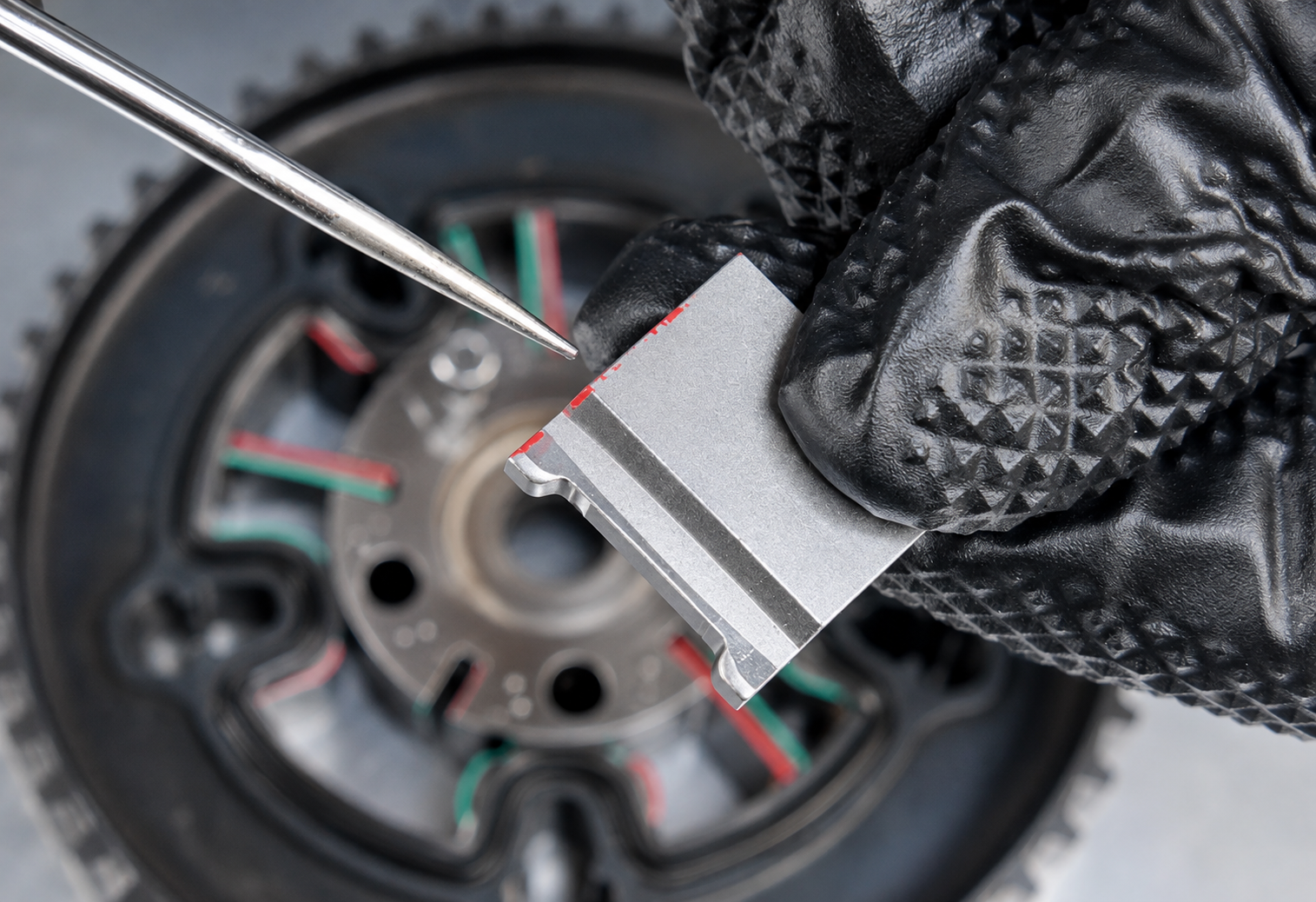 Wear of the vane and its rotor slot creates excessive clearance inside the phaser.
The resulting clearance allows the vanes to move and vibrate inside their slots during rapid changes in camshaft load.
Important: we are not talking about clearance between the outer tip of the vane and the cam phaser housing. The problem is the clearance between the moving vane itself and the slot in the rotor where the vane is installed.
When the driver lifts off the throttle, the direction and magnitude of the forces acting on the camshaft change very quickly. Worn vanes can move inside their slots and hit the slot edges, producing the characteristic metallic rattle.
The Vanes Can Jam or Break
Excessive clearance between the vanes and their rotor slots does more than simply create noise.
A worn vane can tilt inside the slot and begin to bind. In extreme cases, the vane itself can become damaged or even break.
This may lead to:
- the rotor sticking or binding,
- delayed phaser response to oil pressure,
- unstable rotor movement,
- failure to reach the commanded camshaft position,
- increased leakage between oil chambers,
- camshaft timing and correlation faults.
The cam phaser may still be able to move through part of its operating range, but its response becomes slow or unstable. The ECU can then detect a difference between the commanded and actual camshaft position.
For this reason, a rattle on lift-off should not be treated as nothing more than an annoying noise. It can be a sign of progressive mechanical wear inside the phaser.
Camshaft Timing and Correlation Faults
As cam phaser wear becomes more severe, the ECU may begin to log camshaft timing, synchronization or cam/crank correlation faults.
Possible causes include:
- the phaser moving too slowly,
- the rotor momentarily sticking,
- excessive clearance in the moving vanes,
- excessive internal oil leakage,
- a worn locking mechanism,
- the phaser being unable to hold the commanded position.
However, a timing or correlation fault does not automatically mean that the cam phaser itself has failed. Similar symptoms can also be caused by:
- incorrect timing belt installation,
- a worn or incorrectly tensioned timing belt,
- a faulty VVT oil control solenoid,
- contamination in the oil passages,
- incorrect engine oil pressure,
- a faulty camshaft position sensor,
- wiring or electrical problems.
For this reason, the complete system should be diagnosed before replacing the cam phasers.
Diagnosing Camshaft Position
An interesting diagnostic issue on many Alfa Romeo vehicles fitted with this engine is that popular diagnostic software often does not provide a live reading for the actual exhaust camshaft position.
This does not mean that the engine does not measure it.
The exhaust camshaft position sensor is fitted as normal and the ECU reads its signal. Many generic or commonly used diagnostic programs simply do not make this parameter available to the user.
A diagnostic program may therefore display the intake camshaft position and basic VVT control parameters while not displaying the actual exhaust camshaft position.
Full diagnosis may require a more specialised scan tool or diagnostic software capable of accessing these ECU parameters.
The absence of an exhaust cam position value on the diagnostic screen therefore does not mean that there is no sensor or that the ECU is not monitoring exhaust cam position.
Correct Exhaust Camshaft Position
The normal exhaust camshaft position at idle is approximately:
-35.5° ±4°
This value is derived from the valve timing data and phase shift information provided in the Alfa Romeo 4C technical documentation.
Correct Intake Camshaft Position
The normal intake camshaft position at idle is typically around:
20° ±4°
Keep in mind that different diagnostic tools may display camshaft angles using different reference conventions. For this reason, the absolute value is not the only thing that matters. You should also look at the stability of the reading and the difference between commanded and actual cam position.
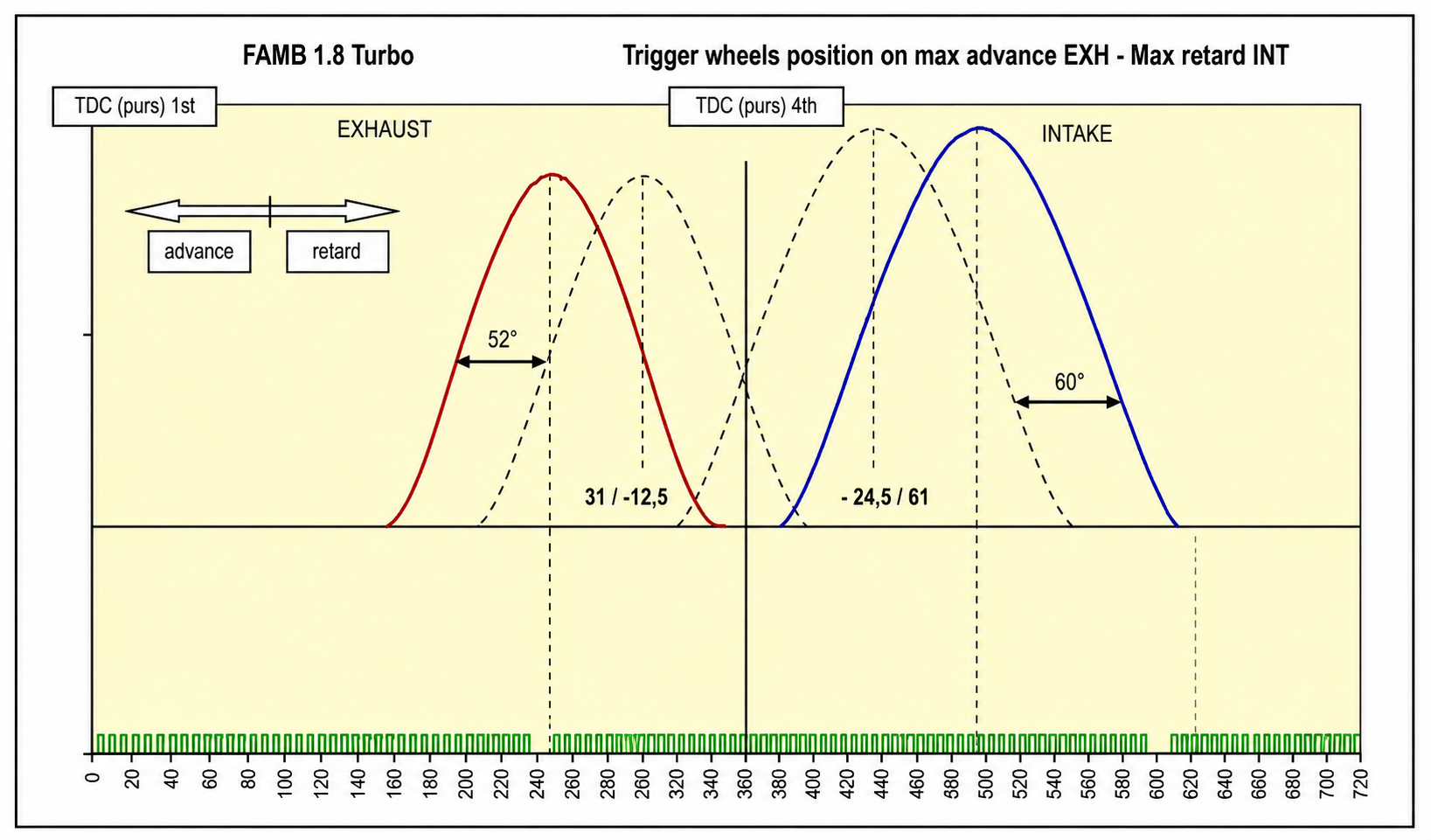 Camshaft base positions and VVT adjustment ranges. Source: Alfa Romeo 4C Workshop Manual.
On a correctly running, fully warmed engine, the readings should remain stable and should not fluctuate rapidly.
Large fluctuations may indicate:
- excessive play inside the cam phaser,
- unstable rotor operation,
- a faulty oil control solenoid,
- incorrect oil pressure,
- incorrect base cam timing.
The Cam Phasers Are Normally Not Actively Adjusting at Idle
During stable idle operation, the cam phasers normally do not make active changes to camshaft timing. They should remain at their base positions.
This means that simply checking live data at idle may not reveal every problem.
During acceleration and increasing engine load, the ECU starts actively commanding changes in camshaft position. This is when you can evaluate:
- phaser response speed,
- the time required to reach the commanded position,
- the difference between commanded and actual position,
- temporary sticking or hesitation of the mechanism,
- unstable camshaft movement.
The best diagnostic results are obtained by logging live data during a road test. Both camshaft positions should be monitored during acceleration, steady load and throttle lift-off.
The transition from acceleration to engine braking is particularly important. This is exactly when worn rotor vanes may start vibrating in their slots and produce the characteristic rattle.
How Should the System Be Diagnosed?
The diagnostic process should begin by identifying exactly when the noise occurs.
- Does the rattle occur only on a cold start, or also when the engine is hot?
- How long does the noise last after startup?
- Does it occur after a short stop or only after the car has been parked for several hours?
- Does the engine rattle when lifting off the throttle?
- Does the noise appear during engine braking?
- Are any camshaft timing or correlation faults stored in the ECU?
- Is the intake camshaft position stable at idle?
- Do the cam phasers reach their commanded positions during acceleration?
- Does the diagnostic tool display the actual exhaust camshaft position?
You should also check:
- base cam timing using the correct timing tools,
- timing belt condition,
- tensioner and idler condition,
- operation of the VVT oil control solenoids,
- cleanliness of the oil galleries,
- oil pressure after startup and with the engine fully warmed up,
- camshaft position sensors,
- wiring and electrical connections.
Only after these points have been checked can the cam phasers be reliably identified as the source of the problem.
Why Oil Quality and Condition Matter
Cam phasers are hydraulic devices. They require clean engine oil of the correct viscosity and sufficient pressure to operate correctly.
Contamination can restrict oil flow through:
- VVT oil control solenoids,
- oil passages in the cylinder head,
- cam phaser oil feed ports,
- internal phaser oil galleries.
Long oil change intervals can encourage sludge and deposits to form and can accelerate wear of precision internal surfaces.
However, changing the oil will not repair a mechanically worn locking pocket or worn vane slots. It can only improve operation if the problem is caused by contamination or unsuitable oil condition or viscosity.
OEM Cam Phaser Price and Availability
Availability of the original INA cam phasers for the 1.75 TBi can be limited. There are practically no conventional catalogue aftermarket replacements available from the usual timing component manufacturers.
Price is another major issue. Depending on supplier and current availability, a pair of original cam phasers can cost as much as approximately PLN 5,000 including VAT.
This is a significant expense, especially when the repair may also require:
- a new timing belt,
- tensioner and idlers,
- mounting bolts,
- seals,
- labour.
Used cam phasers are also a gamble because their real internal condition is often impossible to assess without dismantling and inspecting them.
Redesigned MEHENKER Cam Phasers
An alternative to expensive and difficult-to-source OEM units is a completely new set of cam phasers developed by MEHENKER.
_1.jpg) New MEHENKER cam phaser set for the Alfa Romeo 1.75 TBi engine.
New MEHENKER cam phaser set for the Alfa Romeo 1.75 TBi engine.They are not copies of the original INA units. The design was developed from scratch to eliminate the main weak points of the factory construction.
MEHENKER cam phasers do not use the same arrangement of separate moving vanes installed in rotor slots. The design contains fewer moving parts, eliminating the problem of worn vane slots, sticking vanes and vane breakage found in the OEM construction.
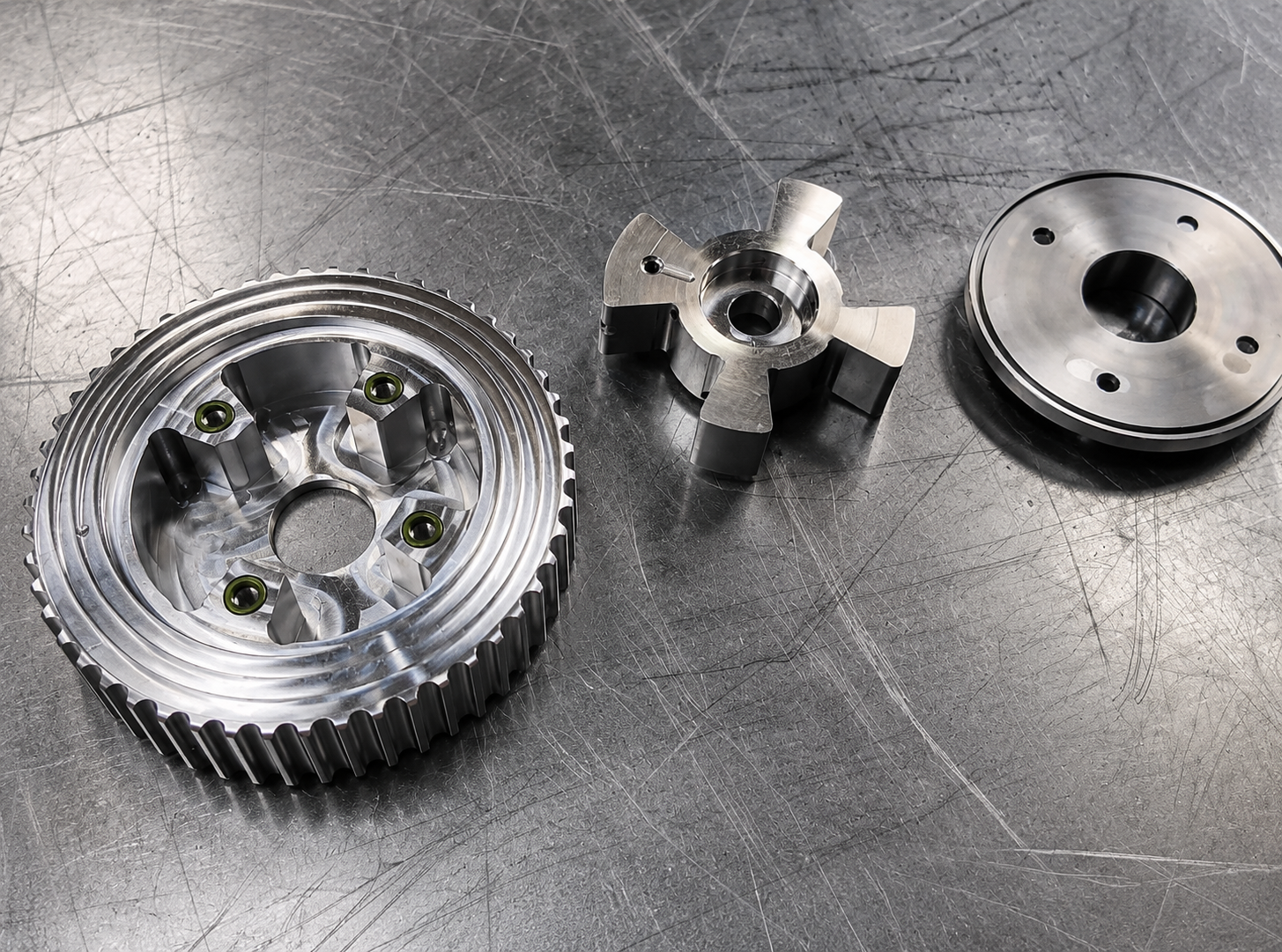 Comparison of the internal design of the original INA cam phaser and the MEHENKER unit.
MEHENKER cam phasers also use a larger effective hydraulic working diameter than the OEM parts. As a result, they provide approximately 10% more actuating torque.
The higher torque helps overcome camshaft resistance more effectively and provides more stable phaser response during changes in valve timing.
At the same time, internal oil leakage is almost 50% lower than in the original INA cam phasers. This means more of the available oil flow is used to actually move and control the mechanism instead of leaking between the internal chambers.
Larger, but Also Lighter
Despite the larger effective working diameter, the MEHENKER cam phasers are significantly lighter than the original INA units.
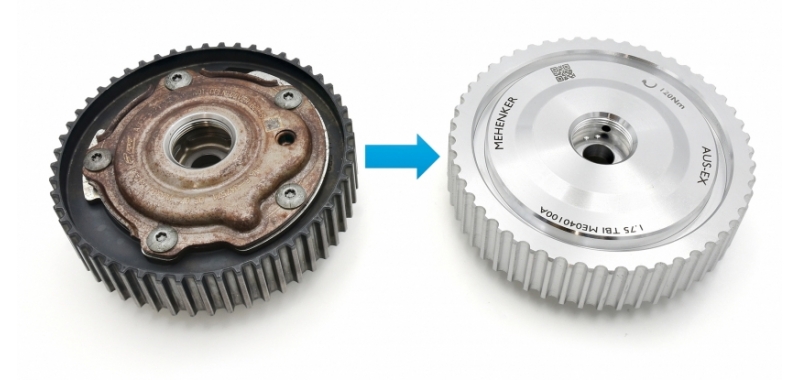
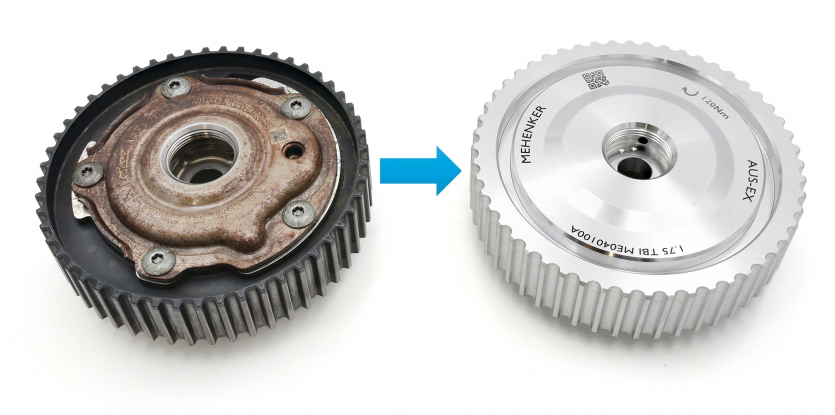 Comparison of the OEM INA cam phaser and the redesigned MEHENKER unit.
This was achieved through a complete redesign of the mechanism, more efficient material distribution and a reduced number of moving components.
Lower mass also means lower rotational inertia, which is beneficial during rapid changes in camshaft speed and dynamic changes in camshaft position.
The main features of MEHENKER cam phasers include:
- completely redesigned construction,
- fewer moving parts,
- no separate moving vanes operating in rotor slots,
- larger effective hydraulic working diameter,
- approximately 10% higher actuating torque,
- almost 50% lower internal oil leakage,
- lower weight than the OEM units,
- reinforced locking pocket,
- construction using specially hardened steel,
- designed and manufactured in Poland.
A set of two new MEHENKER cam phasers currently costs approximately PLN 2,300 including VAT and comes with a two-year warranty.
INA vs MEHENKER Cam Phaser Comparison
| Feature | Original INA Cam Phasers | MEHENKER Cam Phasers |
|---|---|---|
| Part numbers | 55215215 and 55215216 | Replacement for complete OEM set |
| Design | Vane-type | Completely redesigned |
| Rotor vanes | Separate moving components installed in rotor slots | No separate moving vanes |
| Number of moving parts | Higher | Lower |
| Risk of vane slot wear | Present | Eliminated by different design |
| Risk of vane sticking | Present | No separate moving vanes |
| Internal oil leakage | Higher | Almost 50% lower |
| Actuating torque | OEM specification | Approx. 10% higher |
| Weight | Higher | Significantly lower |
| Locking mechanism | Standard OEM design | Reinforced locking pocket |
| Material | OEM construction | Specially hardened steel construction |
| Availability | Limited | New complete set available |
| Approximate set price | Up to approx. PLN 5,000 incl. VAT | Approx. PLN 2,300 incl. VAT |
Can You Keep Driving with Rattling Cam Phasers?
A short rattle on startup does not mean that catastrophic engine damage is about to happen immediately. However, it is a sign of wear inside the mechanism and should not be ignored.
Warning signs include:
- the startup rattle lasting longer over time,
- rattling occurring even with a warm engine,
- rattling every time you lift off the throttle,
- camshaft timing or correlation faults,
- unstable engine operation,
- the camshafts failing to reach their commanded positions.
If the moving vanes have excessive clearance, they can begin to stick or even break. A binding rotor can cause an increasingly large difference between commanded and actual camshaft position.
Whether the vehicle should continue to be driven therefore depends on the diagnostic results. The engine should not be driven hard if loud rattling and camshaft timing faults are present at the same time.
Summary
There are two characteristic types of noise associated with cam phaser wear in the Alfa Romeo 1.75 TBi engine.
Rattling during engine startup most commonly points to wear of the locking mechanism or excessive internal oil leakage.
Rattling when lifting off the throttle can be caused by excessive clearance between the separate moving vanes and the rotor slots in the original INA cam phaser. Worn vanes can vibrate, bind and, in extreme cases, even break.
This can lead to rotor sticking, delayed cam phaser response and camshaft timing or correlation faults.
Diagnosis is made more difficult by the fact that many diagnostic programs do not display the actual exhaust camshaft position even though the engine has a dedicated position sensor and the ECU receives its signal.
At idle, the phasers normally remain in their base positions. The intake camshaft position should typically be around 20° ±4°, while the exhaust camshaft should be around -35.5° ±4°. However, a complete evaluation of the VVT system should also be carried out during acceleration and throttle lift-off.
Because of the high price and limited availability of the original phasers, the completely redesigned MEHENKER cam phasers provide an alternative. They are lighter than the OEM units, provide approximately 10% more actuating torque, have almost 50% lower internal oil leakage and do not use separate moving vanes installed in rotor slots.
MEHENKER Cam Phasers for Alfa Romeo 1.75 TBi
The set includes a new intake cam phaser and a new exhaust cam phaser designed for Alfa Romeo and Lancia 1.75 TBi and 1.8 R4 engines.
Sources and Technical References
The following sources and materials were used in preparing this article:
- Alfa Romeo 4C Workshop Manual – technical information on the variable valve timing system, camshaft adjustment ranges and camshaft positions,
- selected technical images, diagrams and illustrations from the Alfa Romeo 4C service documentation,
- MEHENKER technical documentation and in-house measurements,
- analysis of the design and wear of original INA cam phasers,
- measurements and comparative testing of MEHENKER and OEM INA cam phasers.
Source of selected technical illustrations and data: Alfa Romeo 4C Workshop Manual. All other photographs and technical materials: MEHENKER.